







Free written scope consultation - allowances, timeline, and change-order rules on paper before a single trade is scheduled
Sterling Roofing: The Riverside Owner’s Guide
If you have a Sterling roof product that’s started to fail, this page tells you what’s wrong, what it costs to fix, and who in Riverside can handle it. Most Sterling roofing parts we replace run between $400 and $1,800 installed, depending on what failed and how much of the surrounding roof has to come apart. The typical call starts the same way: a homeowner notices water staining on a ceiling, a shingle in the yard after a Santa Ana wind, or a tile that’s slipped out of line near a valley.
Sterling is a brand name that shows up on a range of roofing materials across Southern California, mostly asphalt shingles and concrete tile profiles installed on older track homes and newer hillside builds alike. We’re an independent Riverside contractor, not a Sterling dealer or factory rep, which means we stock what actually fails and match it by measurement rather than by sales pitch. We also carry compatible parts and materials for KraftMaid, Cambria, and Silestone product lines, but roofing is where most of the spring calls come in.
Which Sterling Models This Applies To
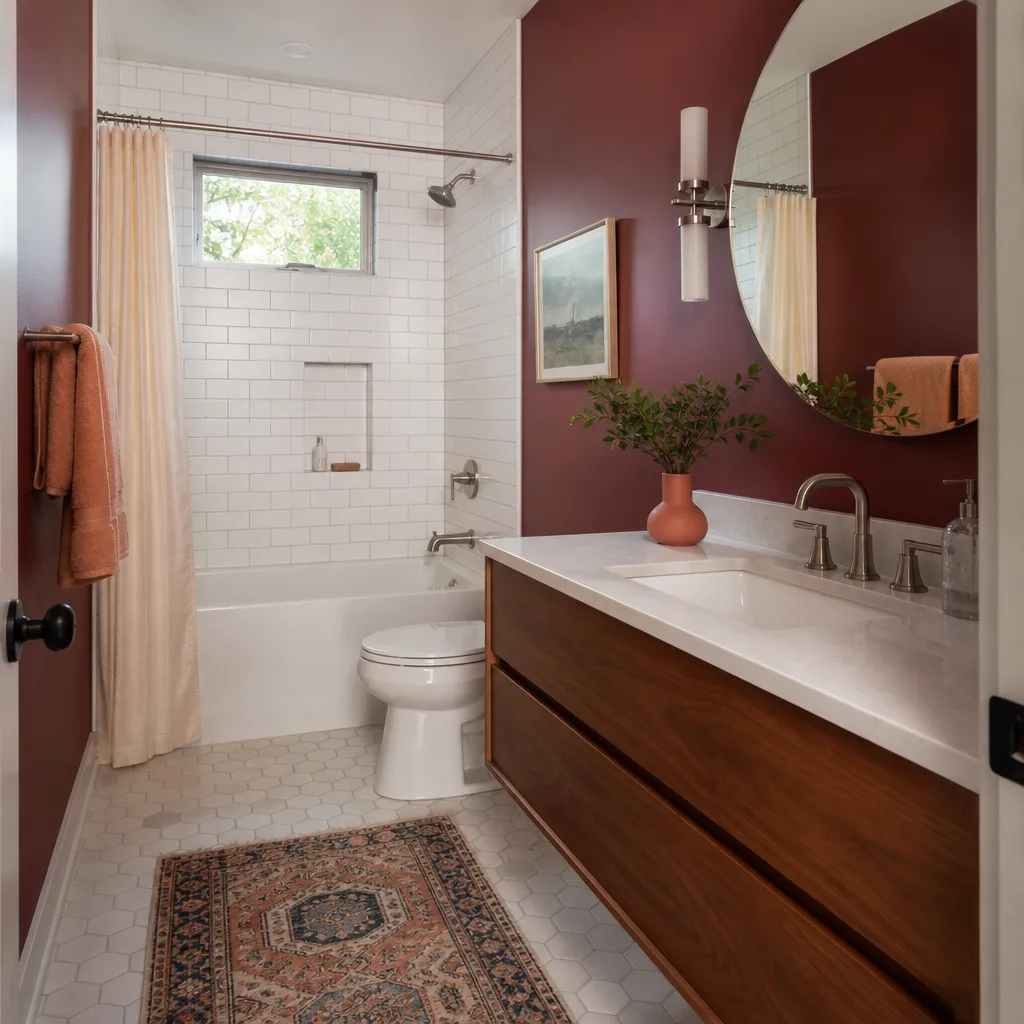
Sterling roofing materials fall into two broad camps in Riverside: asphalt composition shingles (the three-tab and architectural profiles you see on 1970s through early-2000s tracts) and concrete or clay tile profiles installed on a lot of custom and semi-custom homes from Orangecrest to Alessandro Heights. The compatibility question isn’t really about a model number the way it is with a faucet or a cabinet door. It’s about three measurements: exposure (how much of the shingle shows below the one above it), thickness, and the profile of the tile’s leading edge.
Here’s the gotcha we see regularly. Two shingles can look identical from the ground and be a full quarter-inch different in exposure. That quarter-inch mismatch creates a visible line across the roof that telegraphs exactly where the repair happened. On tile, the match point is the water channel: Sterling tile profiles use either a flat pan or a raised-channel underlock, and putting a flat pan where a channeled tile belongs is how small leaks become big drywall bills. We match by taking a sample off the roof and measuring it against stock, and if the exact Sterling profile isn’t made anymore, we source a color-and-thickness match that doesn’t read as a patch job.
Styles & brands we work with



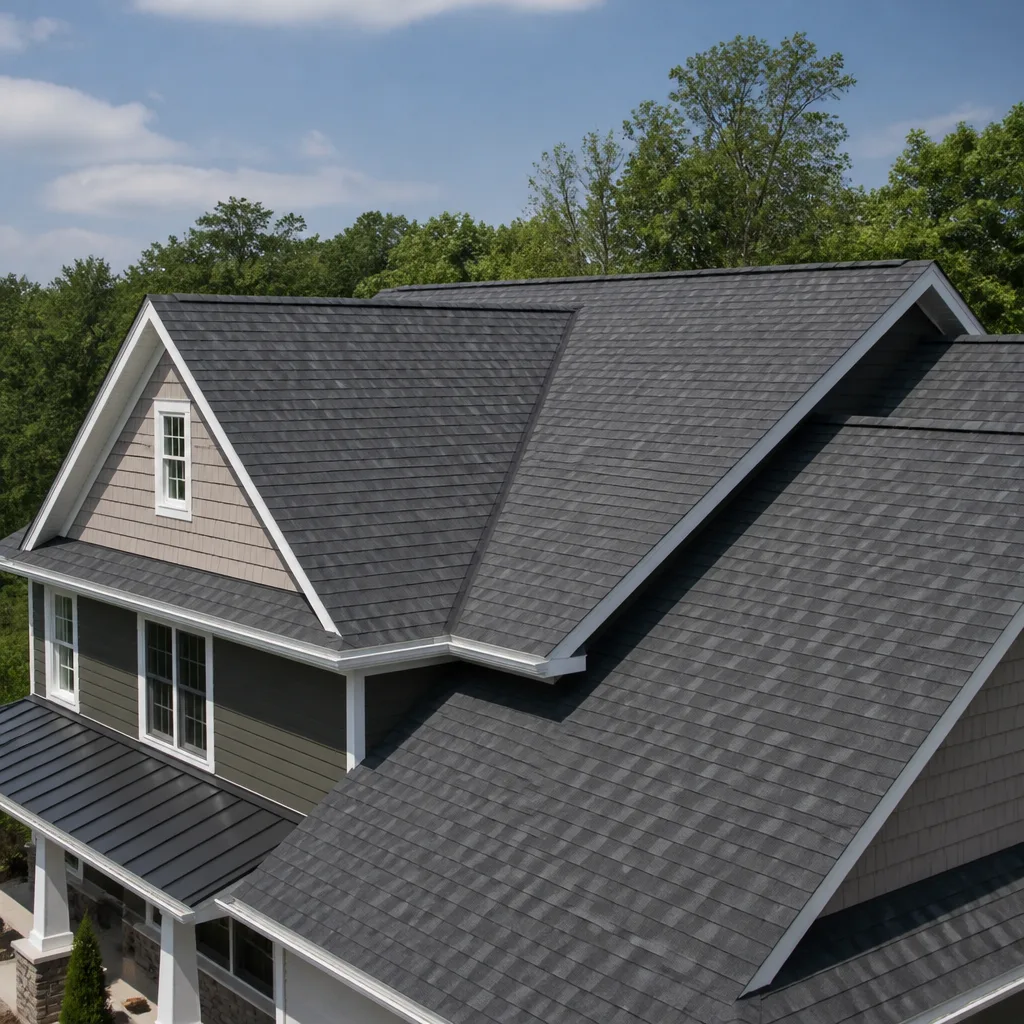

Signs Your Sterling Roofing Is Failing
- Granule loss in gutters or downspout splash blocks. Asphalt shingles shed their ceramic granules as the asphalt binder oxidizes in Riverside heat. By the time the granules pile up, the shingle is past half its life and the felt underneath is starting to take UV.
- Curling or fish-mouthing at shingle edges. This is a moisture-and-sun cycle. The top layer expands and contracts faster than the bottom, and the corners lift. Once they lift, wind gets under them and the failure accelerates.
- Tile slippage, especially on west-facing slopes. Older Sterling tile systems were often set on batten boards with a single nail per tile. After enough Santa Ana cycles and the slow creep of thermal expansion, nails pull loose and tiles slide downslope. You’ll spot a gap at the ridge or a crooked course mid-roof.
- Staining on the underside of eaves or in the attic. This is the one that brings people to a ladder. By the time the ceiling shows water, the leak has usually been tracking along a rafter for weeks. We trace the stain upslope, not downslope, because water runs downhill until it finds a nail or a seam.
- Flashing separation around pipes, chimneys, and valley intersections. Sterling shingle and tile roofs fail at the flashings before the field material goes. The metal lifts, the sealant dries out in Riverside’s low humidity, and water finds the joint. Most leaks trace back to a penetration, not the shingle itself.
See the difference
 Before
 After
After Before
 After
After Before
 After
AfterReplacement Cost & What’s Included
In Riverside, a Sterling roofing repair that stays a repair runs $400 to $1,800. A full roof replacement on a home with Sterling materials runs $8,000 to $20,000, depending on the roof’s square footage, the pitch, how many layers have to come off, and whether the decking underneath is still sound. A small repair, like re-seating a half-dozen slipped tiles or replacing a damaged shingle section, sits at the bottom of that range. Rebuilding a valley or replacing flashing around a chimney runs toward the top.
The number you get from us is a written price before we touch the roof. It includes the parts, the labor, the haul-away of the failed material, and a workmanship warranty in writing. We don’t come back at the end with a change order because the decking was worse than expected; we check the decking when we quote. Same standard applies to our roofing work as to a kitchen remodel: written price up front, written guarantee with the job, and a free return visit if the repair fails inside the warranty period. That’s the Kingswell standard, same one we’ve run on since 2004.
DIY or Call Us?
Here’s the honest split. You can safely do a visual check from the ground: count missing shingles, note where tiles are out of line, clear your gutters so water drains. You can take photos from a ladder if you keep both feet off the roof. What you should not do is climb a two-story Riverside roof with a nail gun and a bucket of roofing cement. Steep pitch, brittle tile, and the false confidence of a Tuesday afternoon are a bad combination. Falls from roofs are the leading cause of serious injury in residential construction, and a repair that looks straightforward from the street rarely is once you’re on the deck.
If the leak is active, if the tile has shifted more than a few inches, or if you can see daylight through the sheathing from inside the attic, call us at (341) 895-1170. We’ll inspect it, give you a written number, and tell you if it’s a repair or a replacement. That’s just how this works: give you a number before we pick up a tool.
FAQs

Sterling asphalt shingles in Riverside typically last 18 to 25 years depending on sun exposure and attic ventilation; Sterling concrete tile can last 40 to 50 years if the underlayment and flashings are maintained. The wildcard in our climate is the west-facing slope, which takes the full weight of the afternoon sun and ages several years faster than the rest of the roof. Call (341) 895-1170 and we’ll tell you honestly how much life your roof has left.
Yes, most Sterling roofing failures can be repaired if the surrounding material is still sound. A slipped tile, a cracked shingle section, or a separated flashing is a targeted fix. The moment it stops making sense is when the repair area exceeds about a third of the field or the underlayment is saturated. We’ll tell you which side of that line you’re on before you pay for anything.
Most single-issue repairs, like replacing a torn shingle section or re-seating slipped tile, are done in one working day. Larger repairs involving valley rebuilds or full flashing replacement can take two to three days. We’ll give you the timeline in writing with the quote, and the crew shows up in the window we gave you.
We keep the most common Sterling shingle profiles, tile profiles, and flashing components on our trucks. If the exact profile isn’t in stock, we can get it from a Southern California supplier in a day or two, and we’ll tell you that up front. We also carry compatible products for KraftMaid, Cambria, and Silestone lines for the interior side of our work.
If your Sterling roof is showing any of the signs above, call us at (341) 895-1170 for a free inspection and a written estimate. No pressure, no change orders, and a written guarantee on the work. That’s how we’ve operated in Riverside for years, and it’s how Trevor Nash runs every job that carries the Penhallow name.
Written by Trevor Nash, Owner, Penhallow Remodeling Riverside at Penhallow Remodeling Riverside, serving Riverside and nearby areas.