
Free written scope consultation - allowances, timeline, and change-order rules on paper before a single trade is scheduled
James Hardie Kitchen Remodeling: The Riverside Owner’s Guide
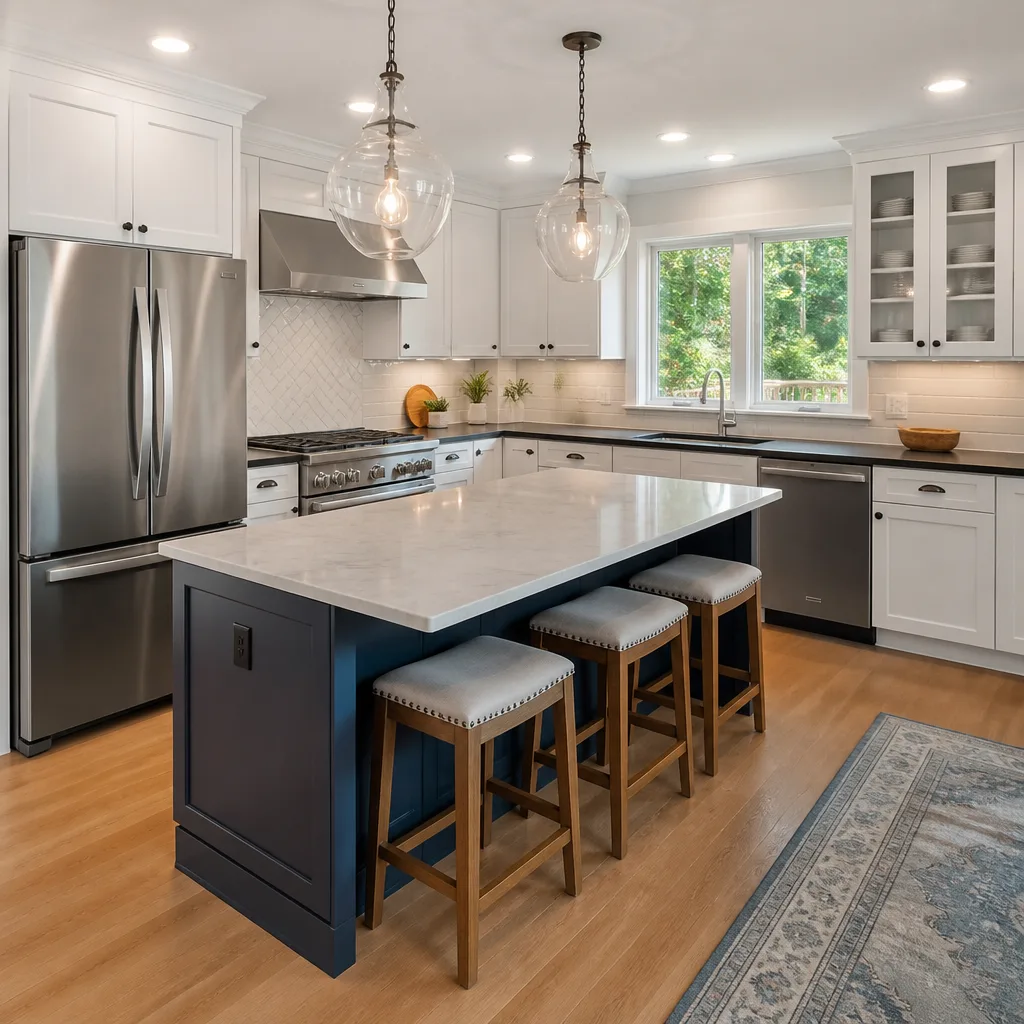
Riverside homeowners with James Hardie siding or trim planning a kitchen remodel typically spend $14,000 – $45,000 on the full project, depending on layout, cabinet line, and countertop material. We stock and install James Hardie-compatible products on most kitchen projects, and we can match new work to your existing siding or trim profile without mismatched color lines or awkward transitions. Most owners call us when they realize the kitchen wall behind the cabinets has water damage, the old backsplash is failing, or the exterior Hardie siding needs to be tied into a new bump-out addition.
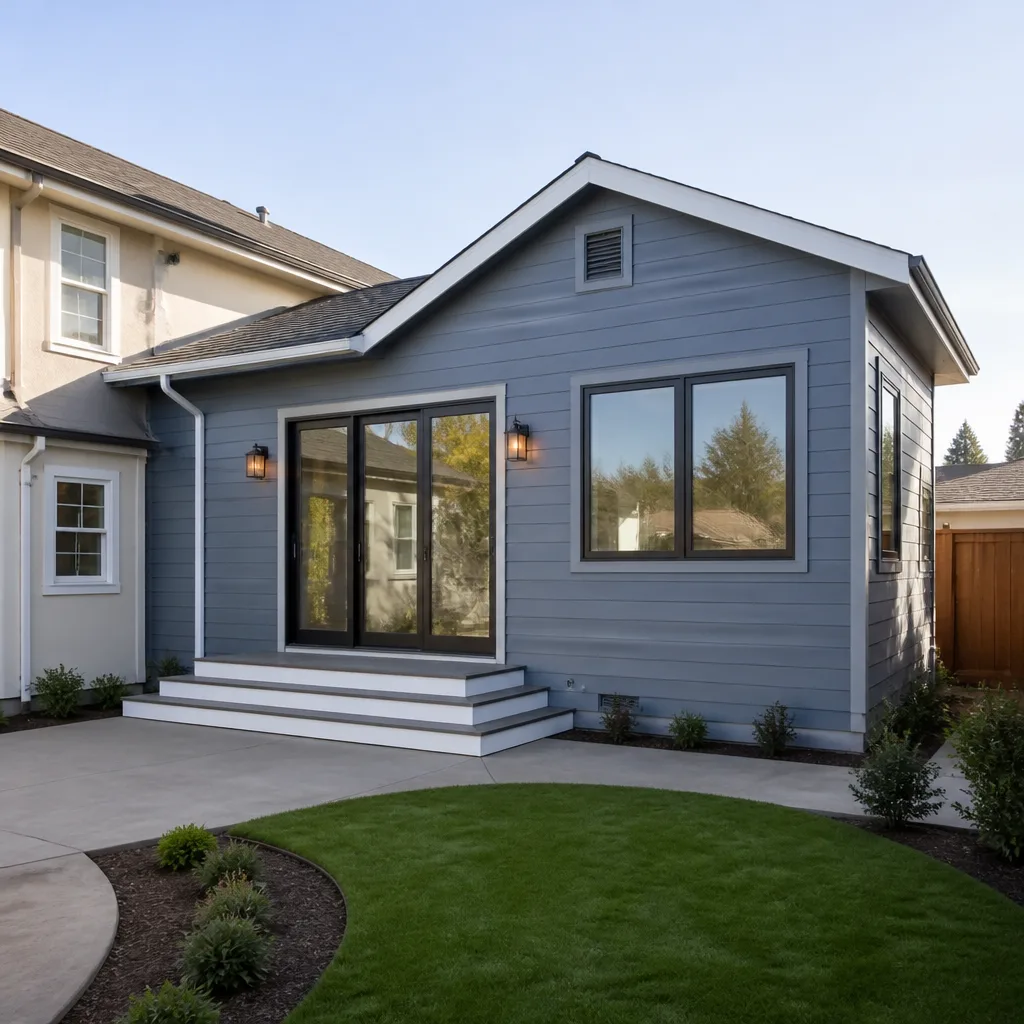
Here’s the thing about James Hardie and kitchens. HardiePlank lap siding, HardiePanel vertical siding, and HardieTrim boards show up in Riverside kitchens more than people expect. Maybe a previous owner enclosed a patio into an eat-in nook. Maybe the range hood vents through an exterior wall wrapped in Hardie. Maybe the kitchen shares a wall with the garage, and that wall has HardiePanel on the outside. When you remodel, those transitions need to be handled correctly, or you get water intrusion, gaps, and a siding repair bill two years after the cabinets are in. Trevor Nash has seen this exact failure on Arlington-area homes where older additions weren’t flashed properly at the kitchen wall line.
We’re an independent contractor in Riverside, not affiliated with James Hardie. But we’ve installed enough of their product to know its tolerances, its trim profiles, and where it fails when a kitchen remodel cuts corners.
Which James Hardie Models This Applies To
If your Riverside kitchen remodel touches an exterior wall, these are the James Hardie products you’re most likely dealing with:
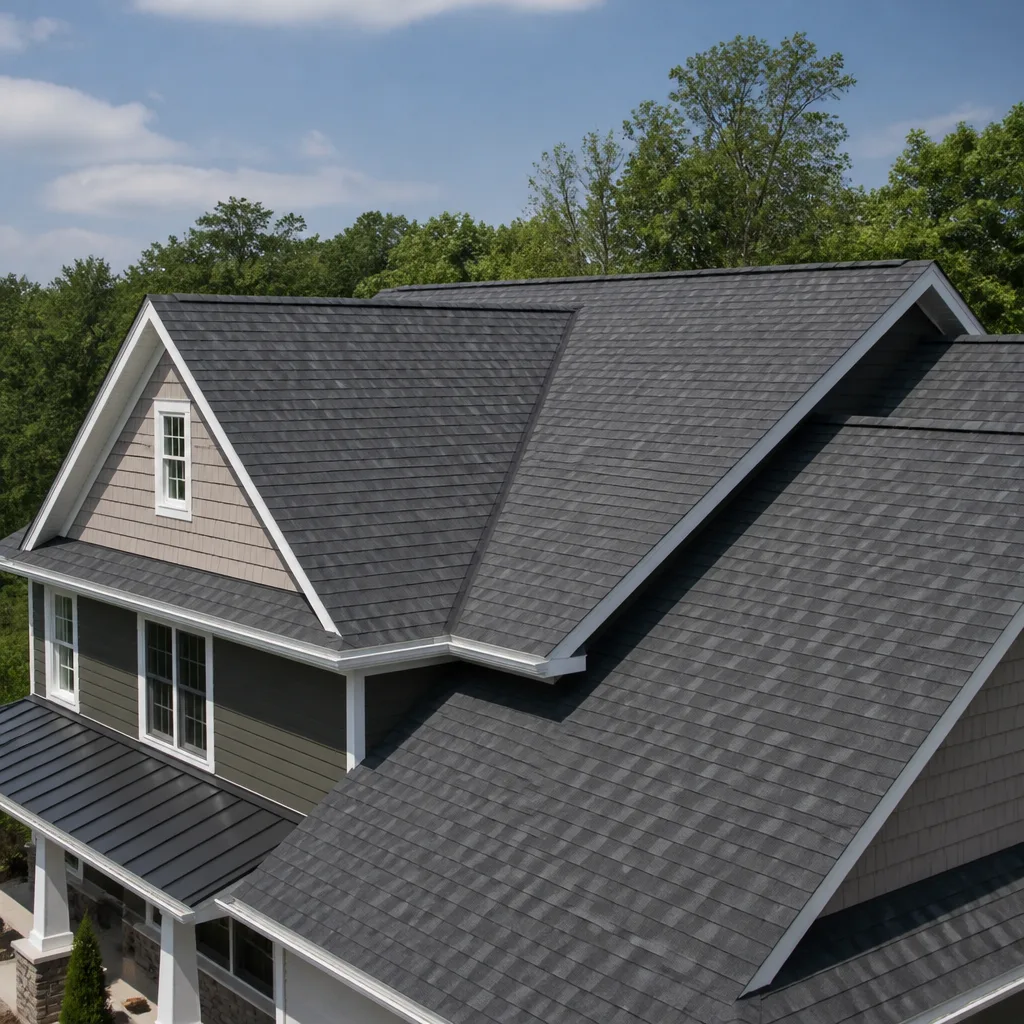
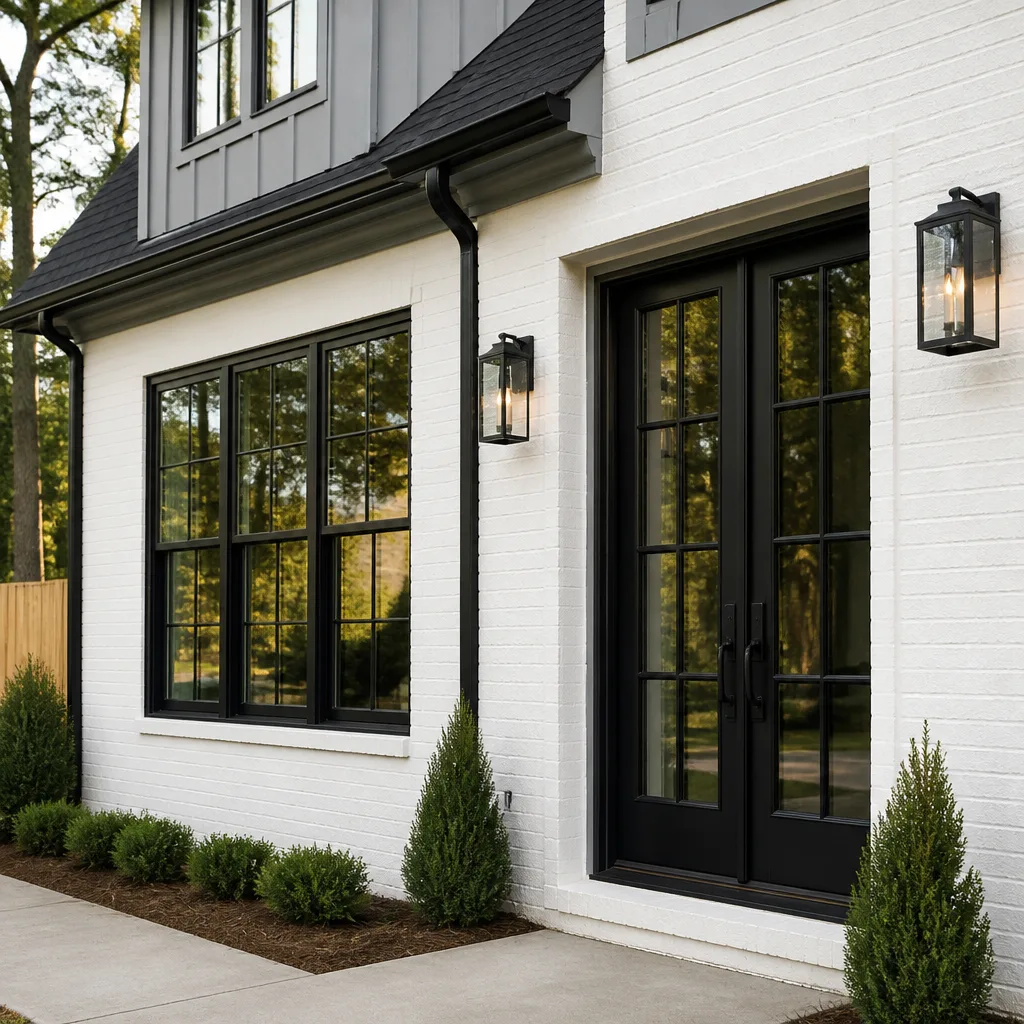
- HardiePlank lap siding – comes in 5.25-inch, 6.25-inch, and 8.25-inch exposures. The exposure matters because a kitchen addition or window change means cutting and splicing lap lines. If the exposure doesn’t match, you see it immediately.
- HardiePanel vertical siding – 4×8 or 4×10 sheets, often used on garage or utility walls that adjoin kitchens. This is the product most often behind a range hood or a wall-mounted vent that was installed without proper flashing.
- HardieTrim boards – 1×4, 1×6, and 5/4 trim that frames windows, doors, and outside corners. Kitchen remodels often move or resize a window, and the trim rebuild is where we see water getting behind the siding.
- HardieBacker cement board – the kitchen product most people actually know about. This is the moisture-resistant layer behind tile backsplashes and floors. It’s 1/4-inch or 1/2-inch thick, and using the wrong thickness under a kitchen floor creates a height mismatch with adjacent hardwood or vinyl.
The compatibility gotcha here is simple: James Hardie products have a 4.3% expansion rate under moisture and temperature swings. In Riverside’s dry heat and cool winter nights, that expansion cycle is real. When a kitchen remodel butts new Hardie siding against old Hardie siding without an expansion gap, you get buckling seams within a year. Most Riverside homes have the older Hardie product, and the newer 4×8 panels have slightly different textures. You can’t always match them seamlessly. We tell owners this up front, before we write the price.
OEM James Hardie products are what we recommend for any exterior-adjacent kitchen work. The aftermarket fiber cement boards we’ve handled don’t hold paint the same way and they don’t carry Hardie’s 30-year non-prorated warranty. For interior HardieBacker under tile, OEM is also the right call, though we’ll occasionally use a quality equivalent if it ships faster and matches the project spec. You’ll know before we buy it.
Styles & brands we work with
Signs Your James Hardie Kitchen Remodeling Is Failing
- Water staining along the baseboard or under the sink wall. This usually means Hardie siding or trim on the exterior side of that wall wasn’t flashed correctly after an old remodel. Water is wicking in behind the siding and tracking down the studs.
- Cracked grout or popping tiles on the backsplash. The substrate (the layer behind your tile) is flexing. If it’s HardieBacker that was screwed without mesh tape on the seams, the tile has no stable base and it will keep cracking, even after regrouting.
- Bubbling paint or soft drywall on an exterior kitchen wall. That’s moisture trapped in the wall cavity. On Riverside homes with HardiePanel, it’s frequently a window or vent penetration that was sealed with caulk instead of proper flashing tape.
- A visible gap where the kitchen addition wall meets the original house. Hardie siding expands and contracts with temperature. If there’s no expansion joint at that transition, the seam opens up and lets water behind the panels.
- Musty smell near the dishwasher or under the sink that won’t go away. That’s often a slow leak that’s been soaking the subfloor and the surrounding framing. By the time you smell it, the HardieBacker or subfloor under the floor tile is already compromised.
None of these are cosmetic. Each one means water is moving somewhere it shouldn’t, and in a Riverside kitchen, that becomes a mold and framing repair if it sits for another season.
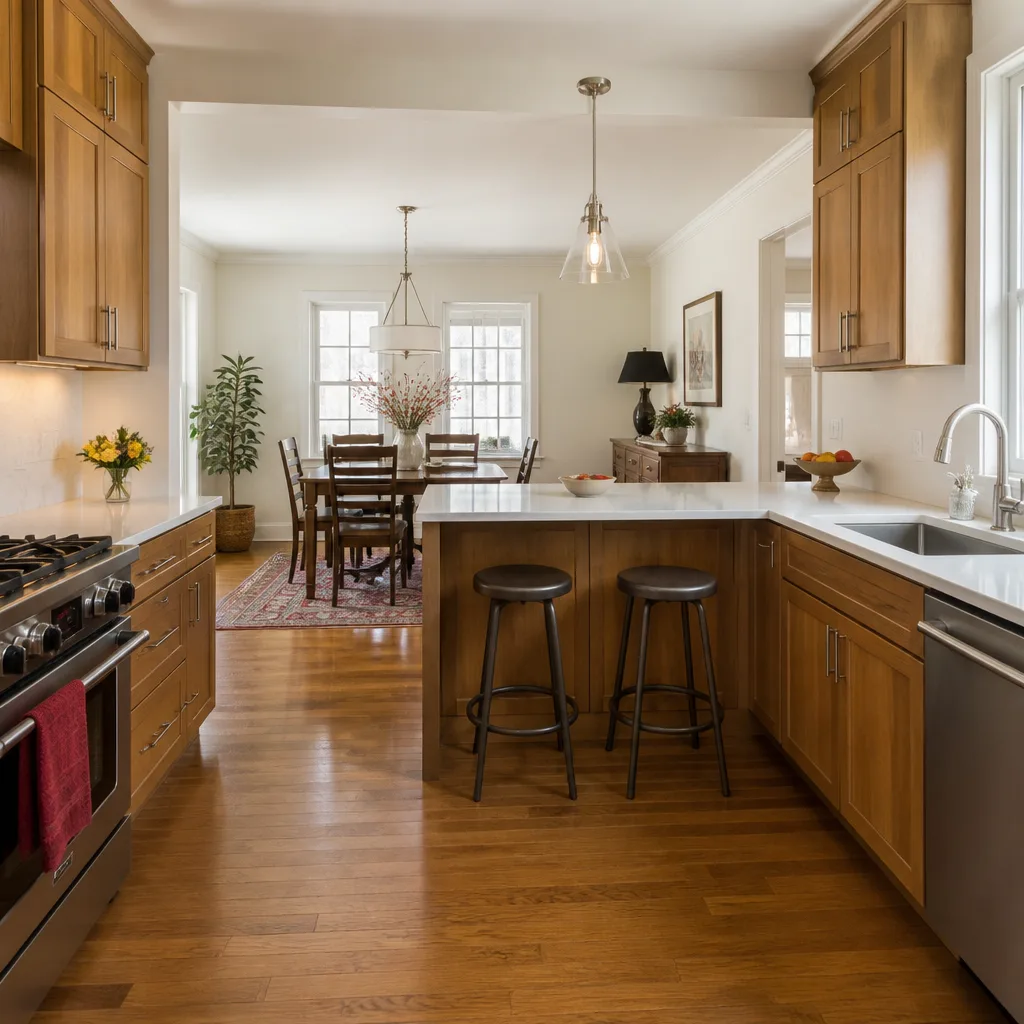
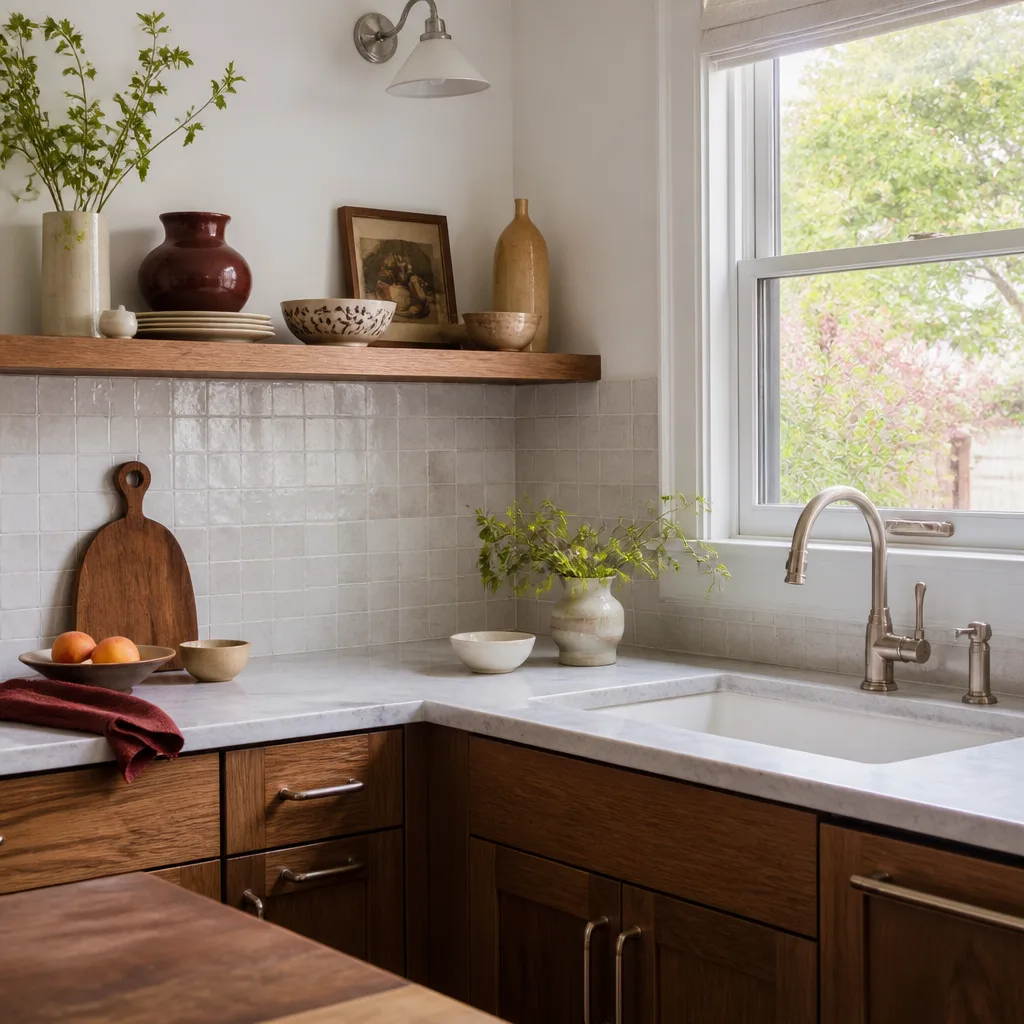
See the difference
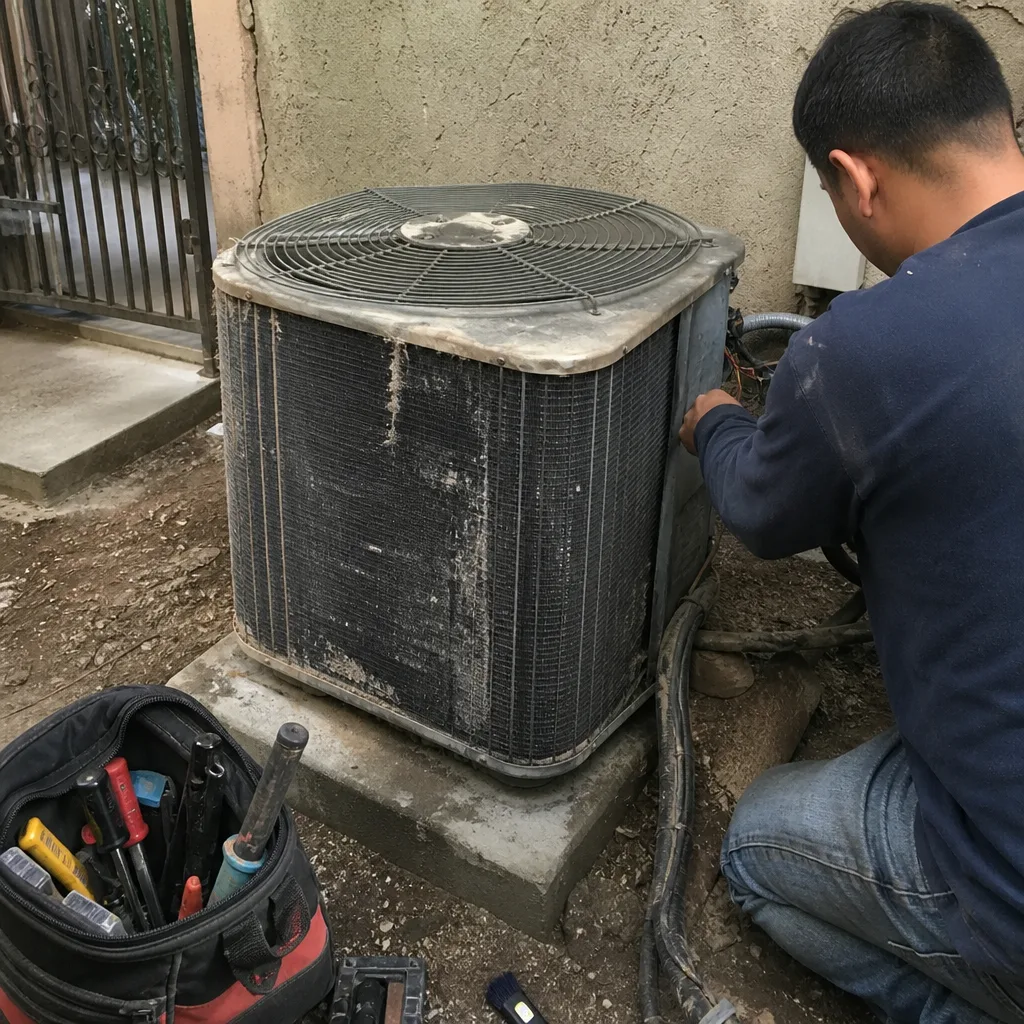 Before
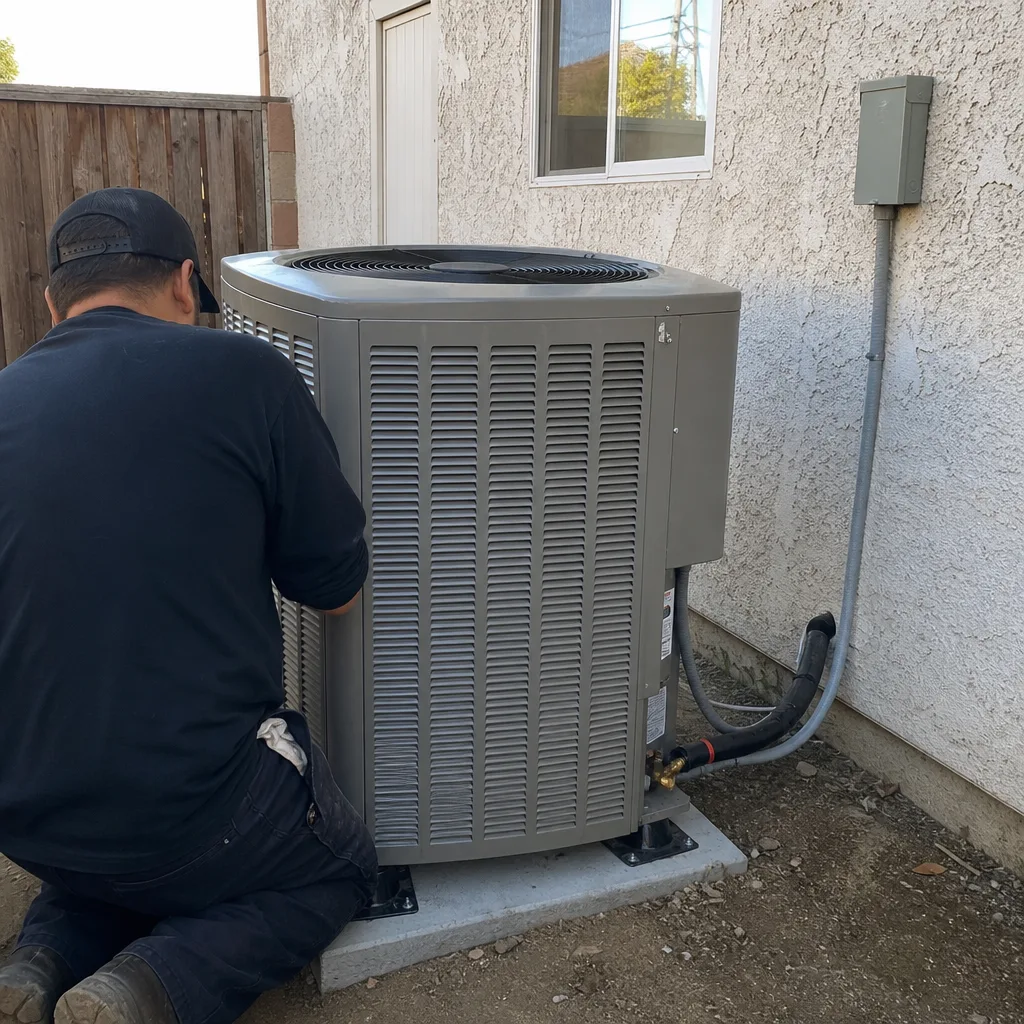 After
After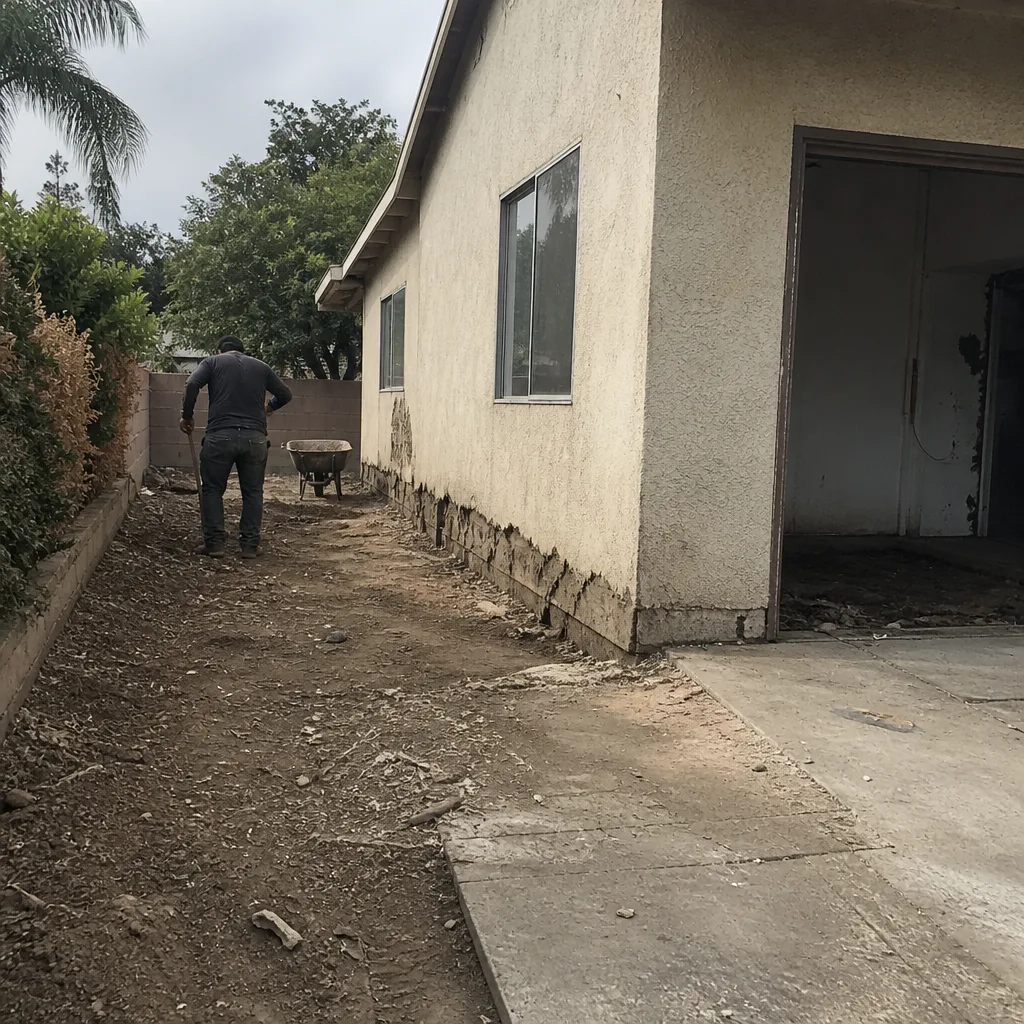 Before
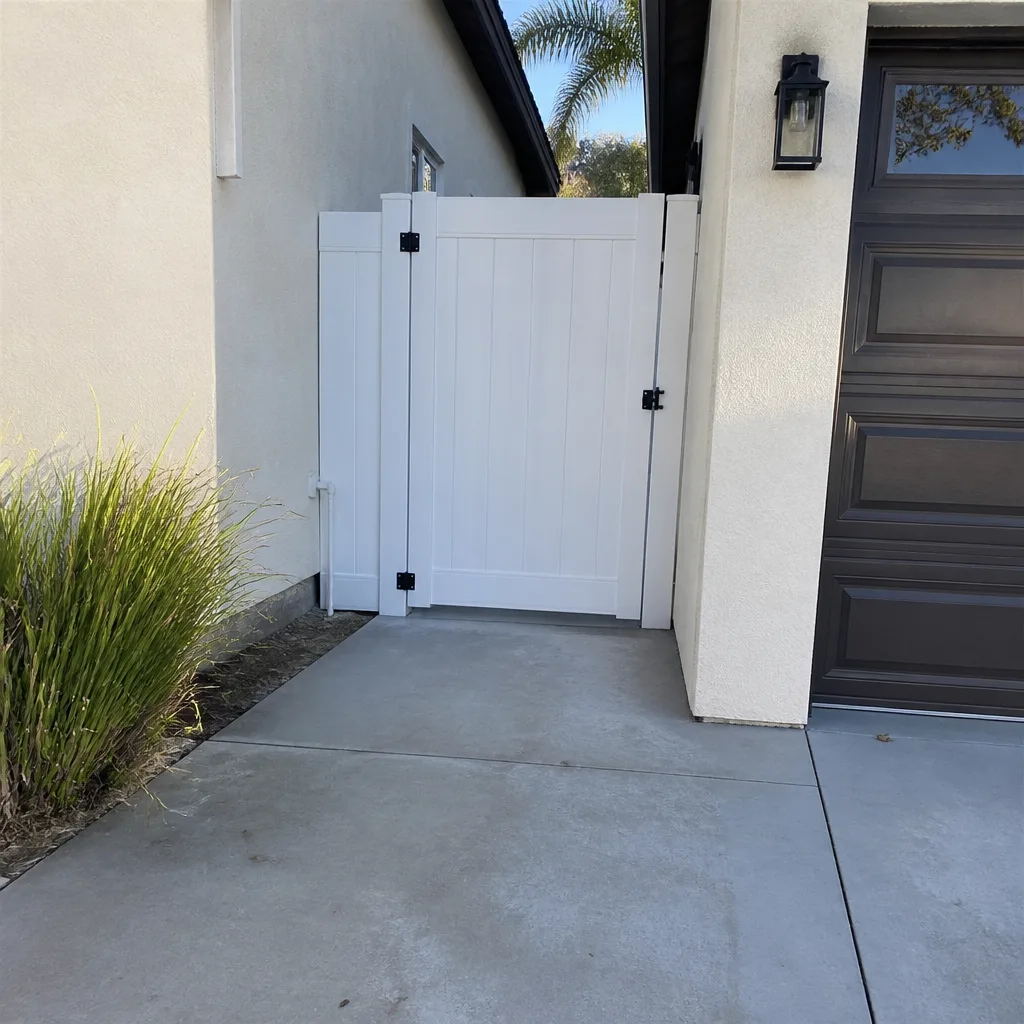 After
After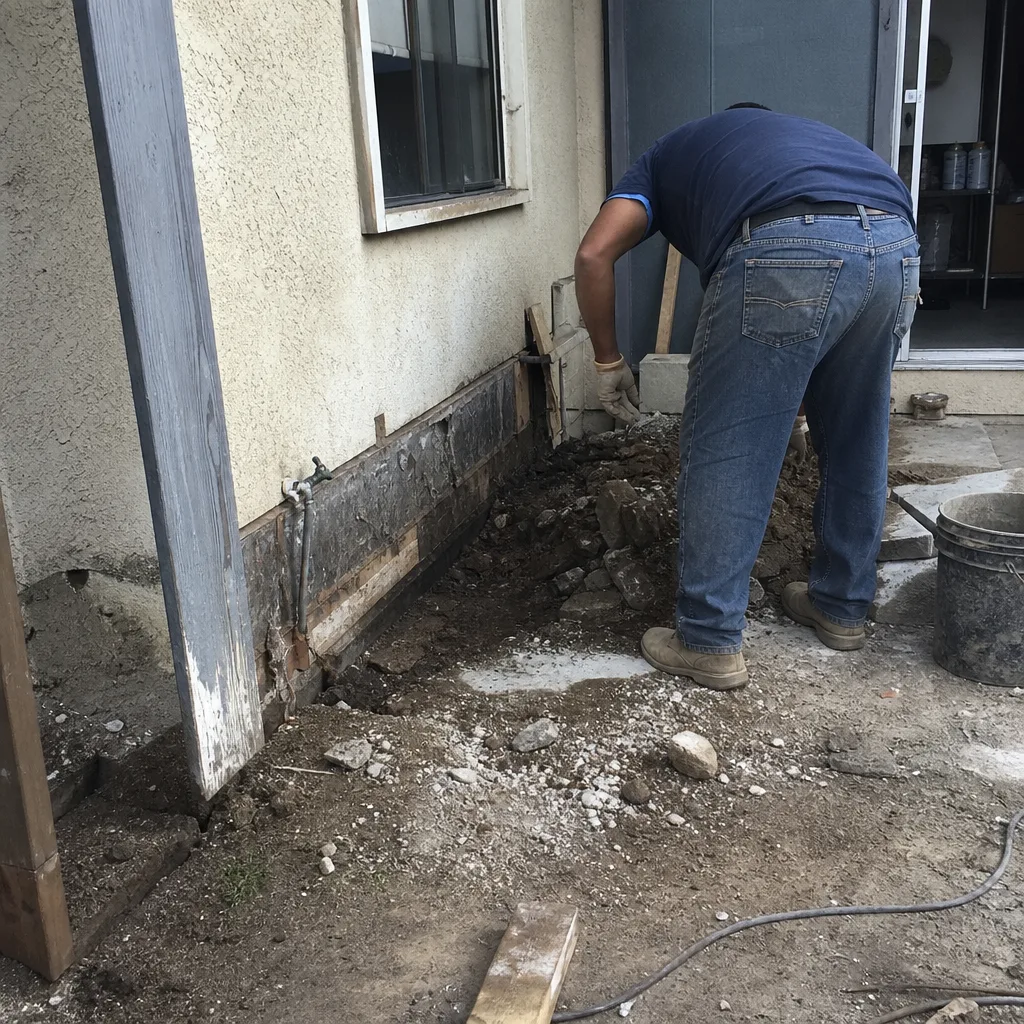 Before
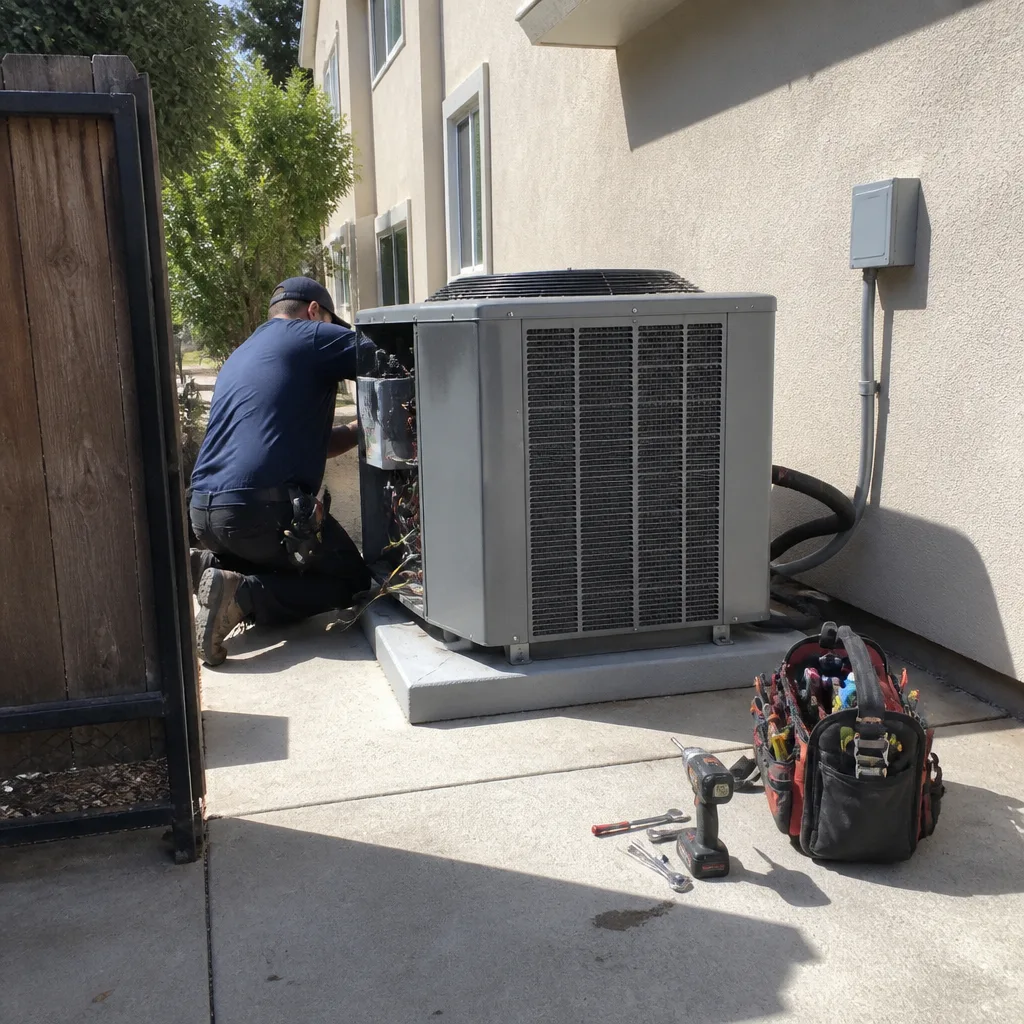 After
AfterReplacement Cost & What’s Included
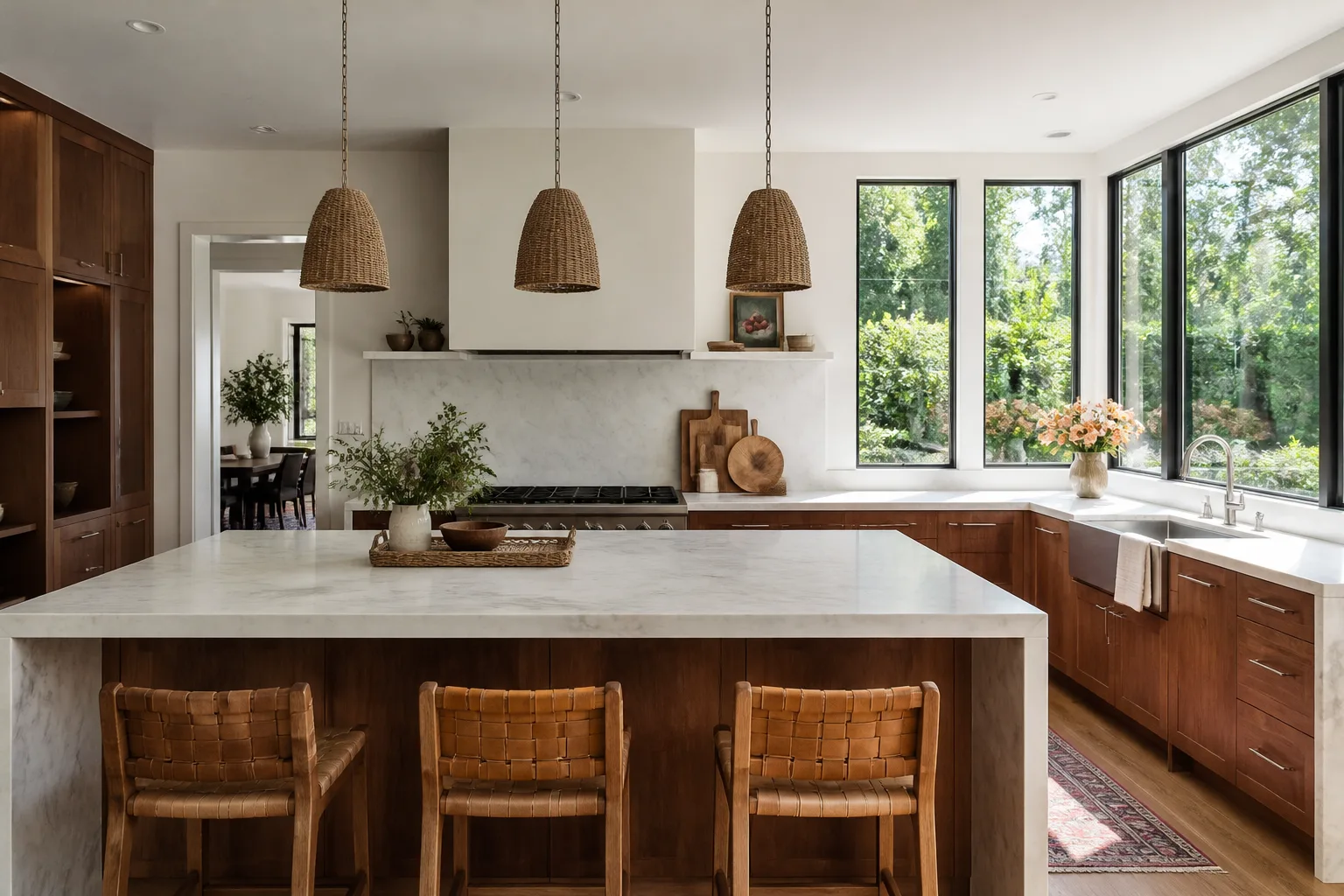
A full James Hardie-compatible kitchen remodel in Riverside runs $14,000 – $45,000. Where your project lands depends on three things: kitchen size and layout changes, cabinet line, and whether we’re doing exterior Hardie work alongside the interior remodel.
If you’re just addressing the Hardie-related failure, here’s a tighter breakdown:
- HardieBacker replacement under a backsplash or floor: $800 – $2,500, including demolition, new board, seam taping, and tile reinstallation.
- Exterior Hardie siding or trim repair tied to a kitchen wall: $1,500 – $5,000 depending on how many panels need to come off, whether framing repairs are needed behind them, and how much flashing work is involved.
- Kitchen remodel including new HardieBacker, cabinets, counters, and the finish work: $14,000 – $45,000. The spread is cabinet line (KraftMaid and Wellborn both on our list, along with Cambria and Silestone countertops), layout changes, and whether we’re pulling permits for structural work.
Every estimate we write in Riverside includes the part cost, the labor cost, and the disposal fee, separated line by line. You get a written number before we start, and that number is what you pay unless you change the scope. No change orders that show up after demo. If something fails inside a year, our 365-Day Done Right Promise means we come back and fix it at no charge, in writing, on every project.
DIY or Call Us?
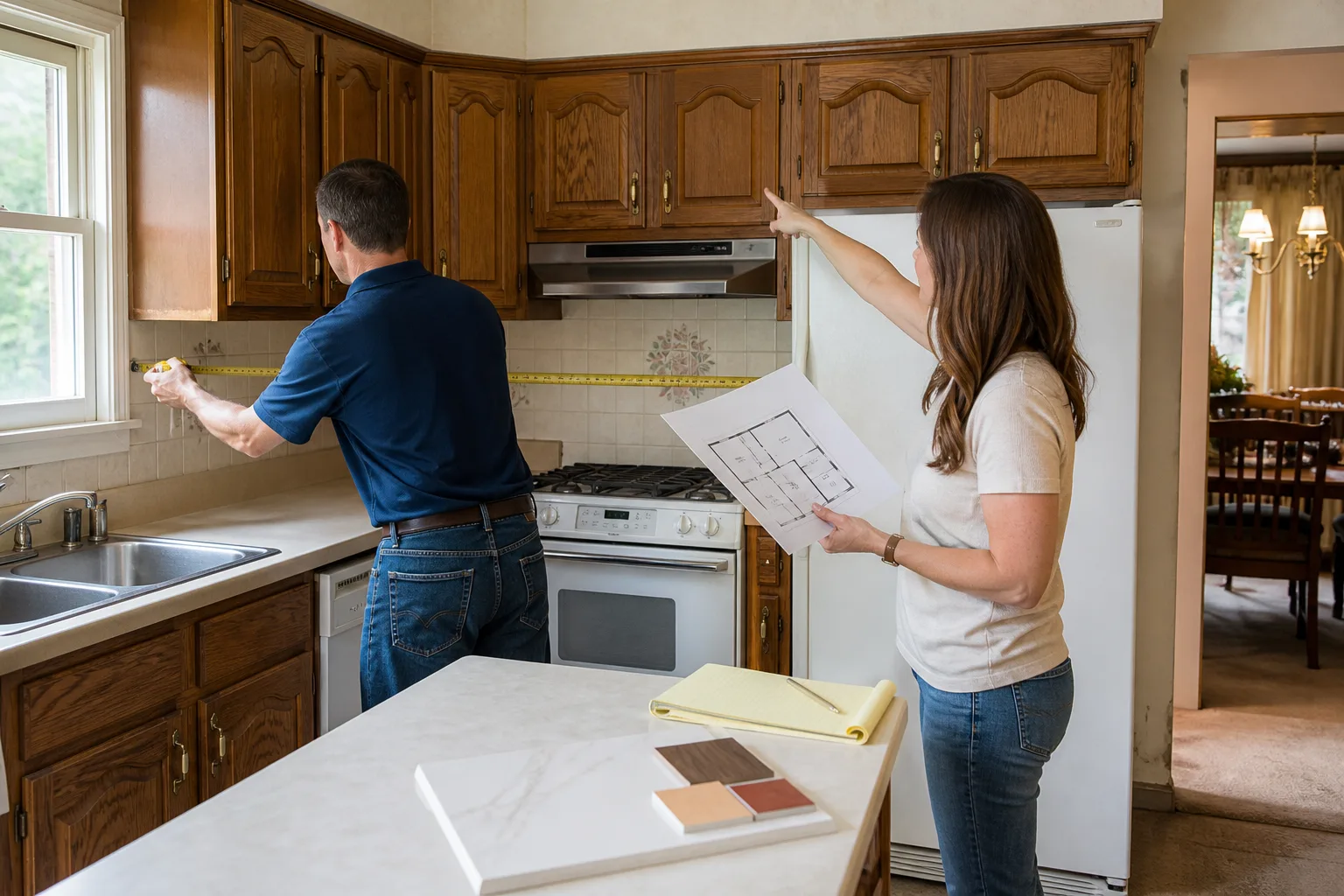
You can safely check a few things yourself. Look under the sink with a flashlight and feel for dampness around the water lines and drain. Check the grout lines on the backsplash for hairline cracks. Step outside and look at the exterior wall behind your kitchen for missing caulk, gaps at window trim, or siding panels that sit proud of the ones next to them. That’s all safe to inspect.
What I wouldn’t do yourself is pull off siding, cut into a kitchen wall, or remove tile to expose the substrate. Water-damaged framing is a structural question, and cutting James Hardie siding produces silica dust that requires proper respiratory protection. The wrong cut, a missed flashing detail, or a tile job without a properly taped seam will fail again, and the second repair costs more than the first one would have. Give you a number before we pick up a tool, that’s just how this works. Call (341) 895-1170 and we’ll look at it.
FAQs
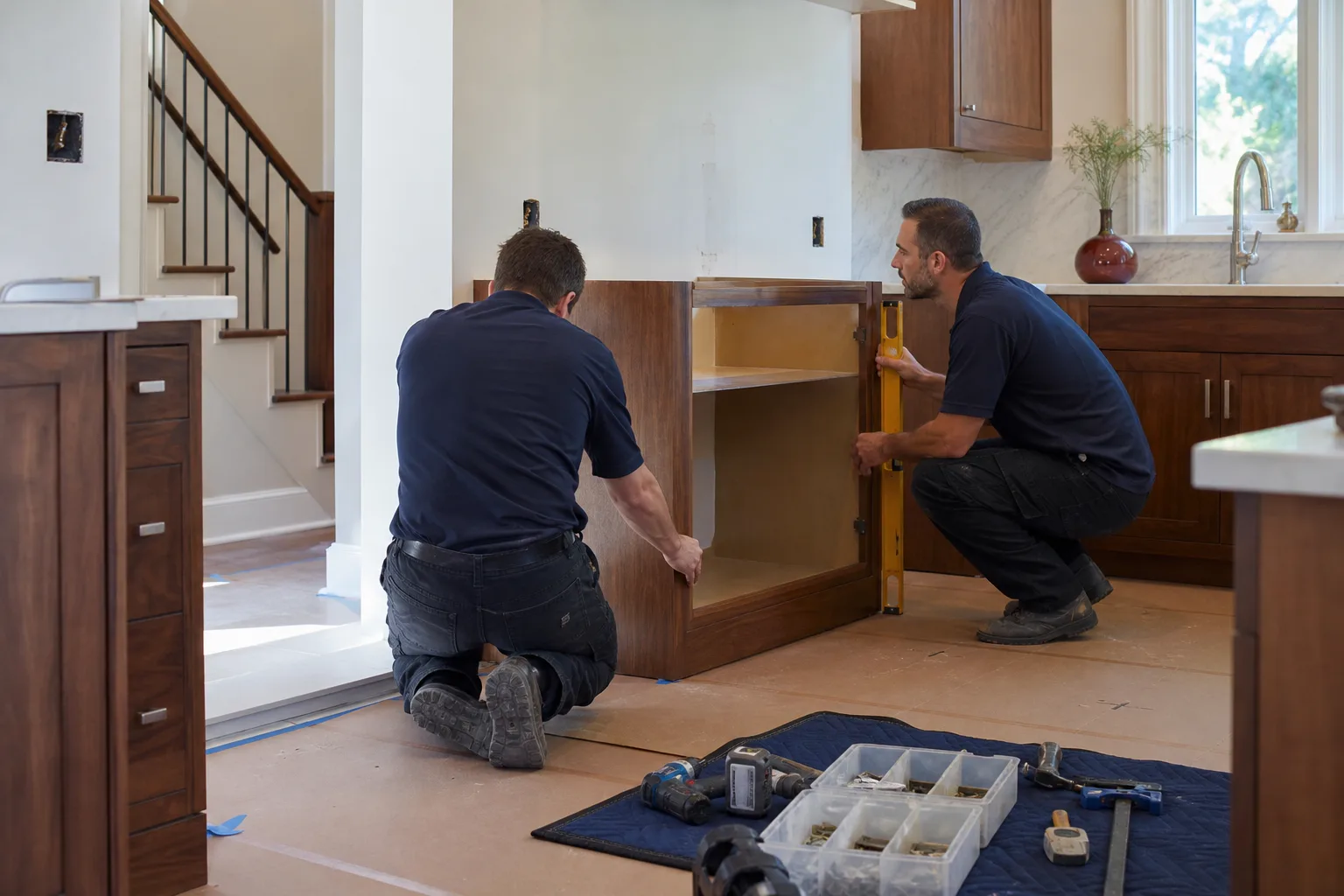
James Hardie siding carries a 30-year non-prorated warranty and typically holds up 30 – 50 years in Riverside’s climate, though paint cycles need refreshing every 10 – 15 years. HardieBacker cement board under tile lasts as long as the tile installation, provided the seams were taped with mesh tape and the board wasn’t exposed to standing water. The board itself doesn’t rot, but the wood framing behind it can, which is why flashing and water management matter more than the board’s lifespan. Call (341) 895-1170 if you’re seeing signs of trouble behind your tile, and we’ll confirm what’s actually going on before you spend money.
In many cases yes, we can isolate the repair. We can replace a section of HardieBacker, cut out and replace damaged siding panels, or reflash a single window without gutting the whole kitchen. The limiting factor is whether the water damage spread to the framing, which we won’t know until we open the wall. We’ll show you what we find and give you a written price for the repair before we go further. Estimates are free at (341) 895-1170.
A typical Riverside kitchen remodel with Hardie siding or trim work takes 4 – 8 weeks, depending on cabinet lead times and whether we’re doing structural changes that require permits and inspections. A focused Hardie repair to a single wall or backsplash area can be done in 2 – 5 days. Before we start, we give you a defined arrival window and a schedule in writing, and we show up in it.
Our Riverside crews typically stock 1/4-inch and 1/2-inch HardieBacker, seam tape, and fasteners on the truck for tile work. For siding and trim, we order the specific HardiePlank or HardiePanel product to match your existing profile, since exposure sizes and textures vary by installation year. We also work with KraftMaid, Cambria, and Silestone products when the kitchen remodel includes cabinets or counters, and those are ordered to spec after your layout is finalized. Call (341) 895-1170 and we’ll check our stock for your job.
Written by Trevor Nash, Owner, Penhallow Remodeling Riverside at Penhallow Remodeling Riverside, serving Riverside and nearby areas.