








Free written scope consultation - allowances, timeline, and change-order rules on paper before a single trade is scheduled
Quikrete Fence Installation: The Riverside Owner’s Guide
Quikrete fence installation in Riverside typically runs $3,500 to $9,000 for a full perimeter, depending on linear footage, soil conditions, post depth, and whether we’re removing an old fence first. Most Riverside homeowners call us after a post has gone loose or a section has started leaning, and in many cases the concrete footing is the culprit, not the fence itself. The good news: we stock Quikrete Fast-Setting Concrete Mix on the truck year-round, so a failed post can often be reset the same day we diagnose it. Trevor Nash has seen this more times than he can count across the Inland Empire: water pools around the post base after a hard rain, the soil softens, and a perfectly good fence starts tilting toward your neighbor’s yard.
Before you replace anything, understand that Quikrete isn’t the fence, it’s the footing that holds the fence in place. If your fence is leaning, checking the concrete condition around each post is the first step before spending money on new panels or rails.
Which Quikrete Models This Applies To

Quikrete makes a few different concrete products that Riverside fence contractors use, and the right one depends on what you’re putting in the ground. Here’s how we pick:
- Quikrete Fast-Setting Concrete Mix (No. 1004-50): This is what we pour for most wooden and vinyl privacy fence posts in Riverside. It sets in 20 to 40 minutes, so we can level a post and move to the next one without losing a day to cure time.
- Quikrete High-Strength Concrete Mix (No. 1101): Used for posts carrying heavier loads, like gates or taller fence sections, or when a homeowner wants extra anchoring in expansive Riverside clay soil that shifts seasonally.
- Quikrete All-Purpose Gravel (No. 1151): We use this for drainage at the base of posts, especially in low-lying areas of Riverside like parts of Arlington where water can sit after winter storms.
Here’s the compatibility gotcha that surprises Riverside homeowners: you can identify your existing footing material by its color and aggregate. Fast-setting mix cures gray with a slightly sandy surface and chips under a screwdriver. High-strength mix has a noticeably coarser aggregate visible at the surface and is harder to chip. If you can’t tell, we bring a small hammer and check in fifteen seconds. Aftermarket or generic concrete mixes work in most posts, but they set slower, and in Riverside’s summer heat, slower setting means more water evaporation at the surface, which can leave a weaker top cap around your post. We stick with Quikrete because the set-time is predictable, and predictability is what keeps a fence post from shifting during the first wind event.
Styles & brands we work with



Signs Your Quikrete Fence Installation Is Failing
- Post leans more than 2 inches off vertical. In almost every case, the concrete footing has cracked below grade or the soil around the footing has eroded. A post that leans this far isn’t just unsightly, it’s pulling stress into the rails and panels on either side.
- Concrete has risen above the soil line. This is called frost heave. Riverside’s clay soils expand when they absorb water, and even a 3-inch uplift can break the concrete collar away from the post entirely.
- Water pools at the post base for more than an hour after rain. Poor drainage around the footing softens the surrounding soil over time. In neighborhoods with heavy clay, like the Arlington area, this is the number-one cause of post failure we see.
- Fence section sags between posts. The fence rails themselves may be fine, but if a post has twisted inside its concrete sleeve, the panel loses its support geometry. We see this most often after a long hot summer followed by a wet winter: the concrete expands and contracts, leaving a gap where water gets in and loosens the bond.
- Rust stains bleeding down from post hardware. Metal brackets or screw heads rusting into the concrete tells you water has been sitting inside the footing, which over time breaks down the concrete’s hold on the anchor hardware.
See the difference
 Before
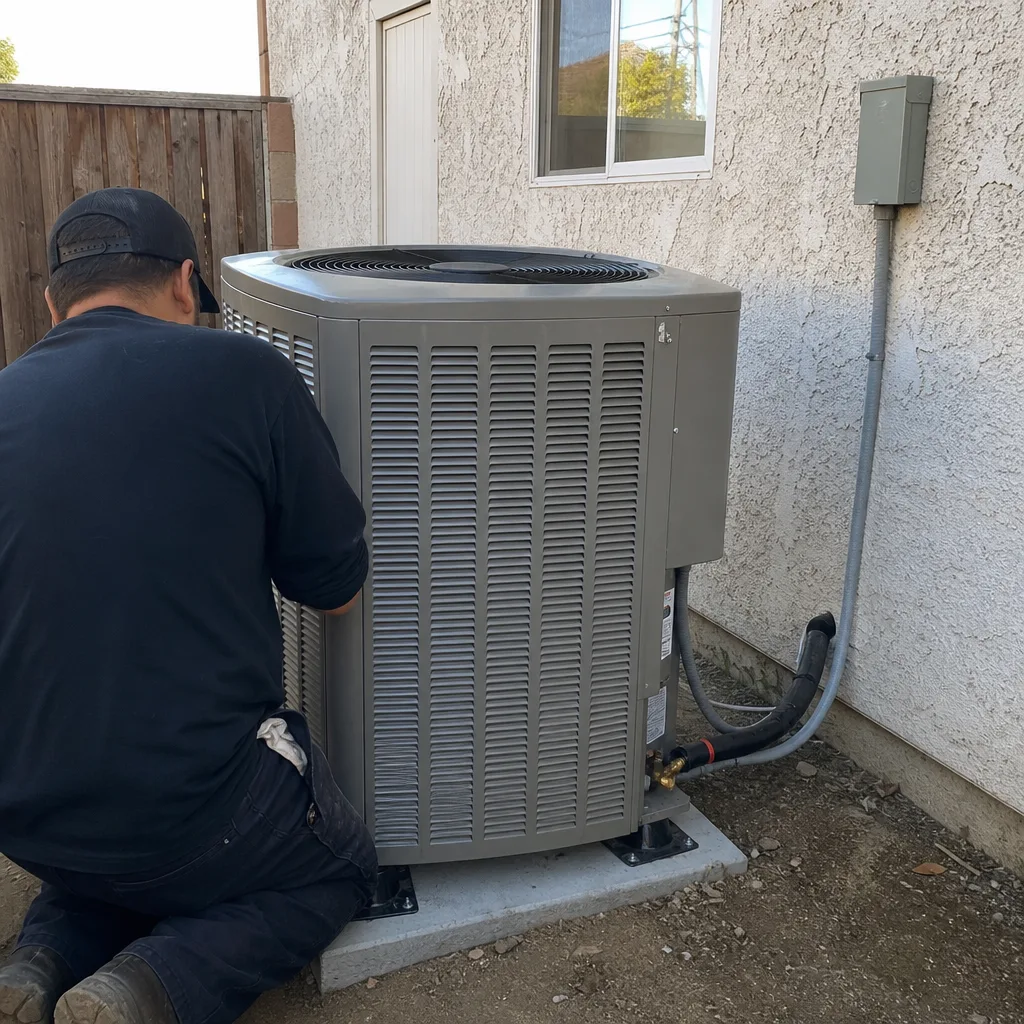 After
After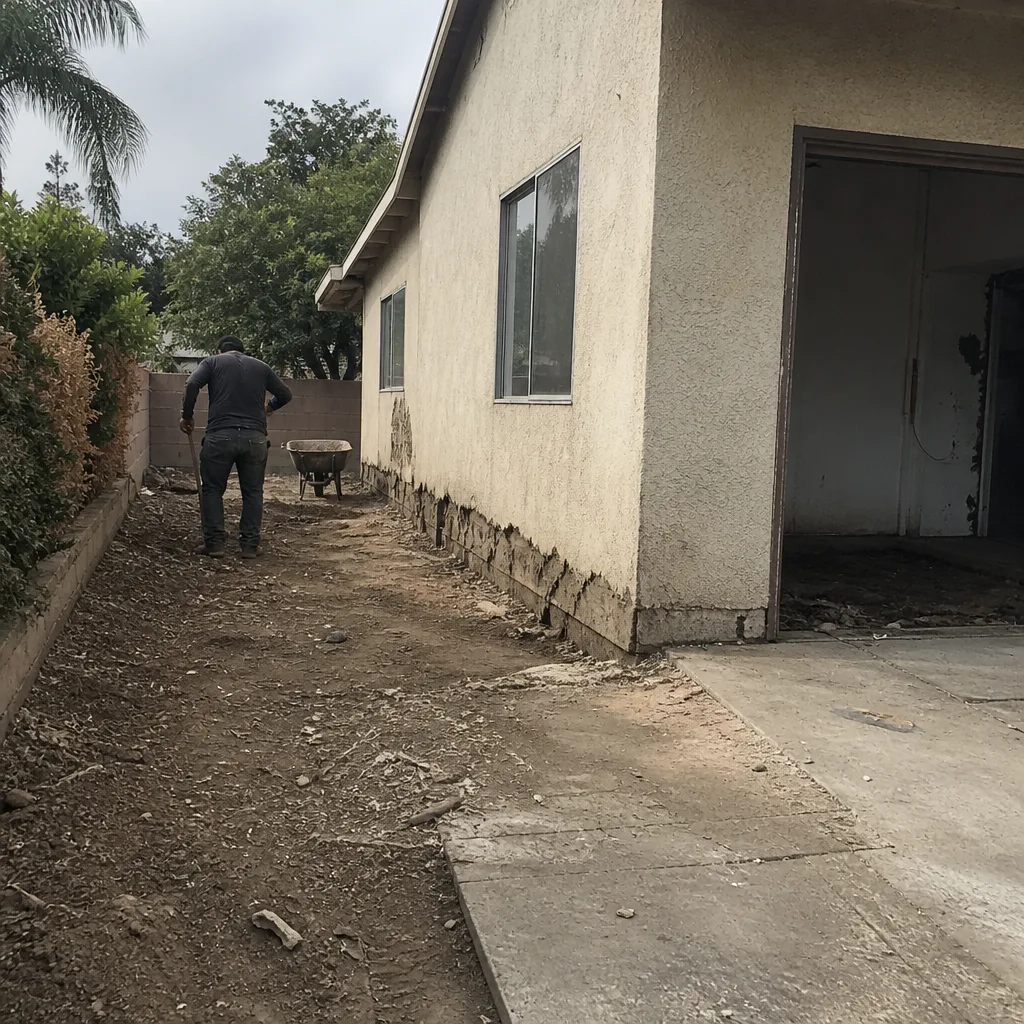 Before
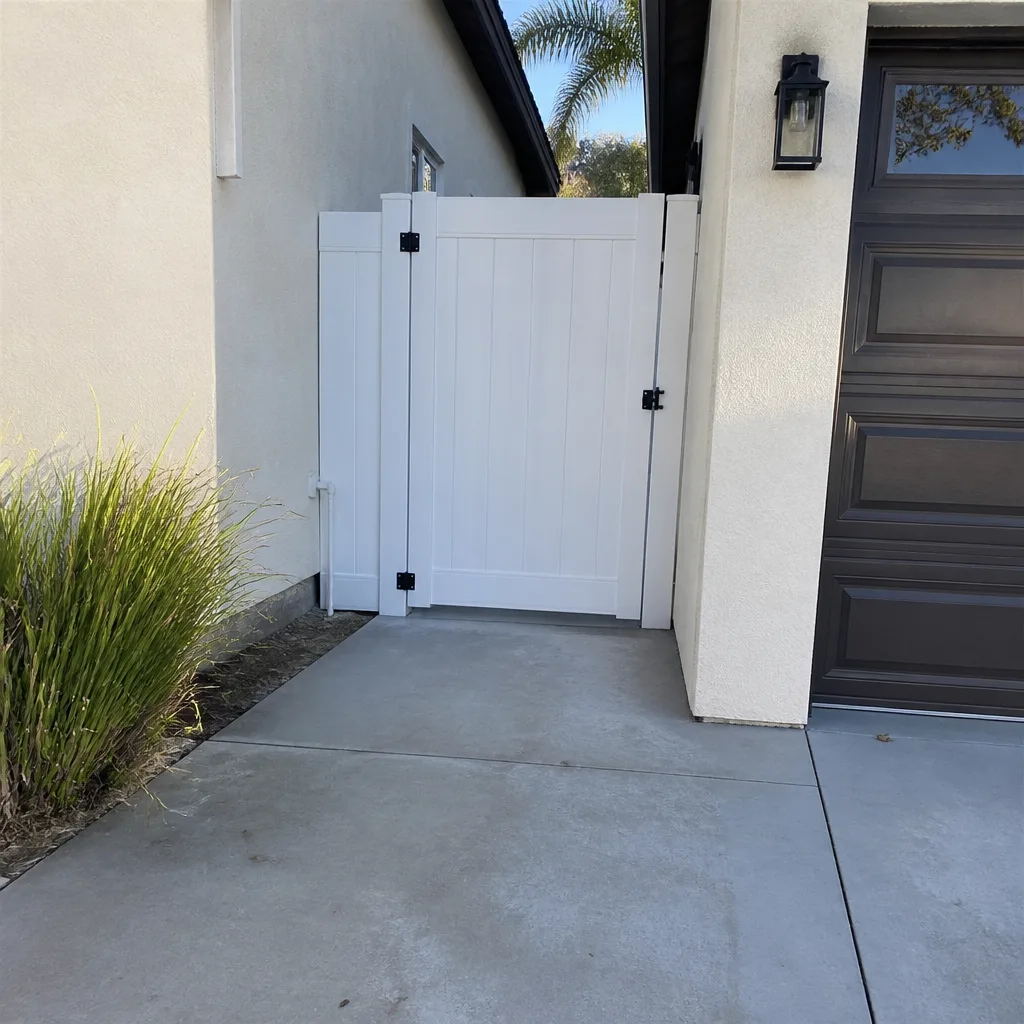 After
After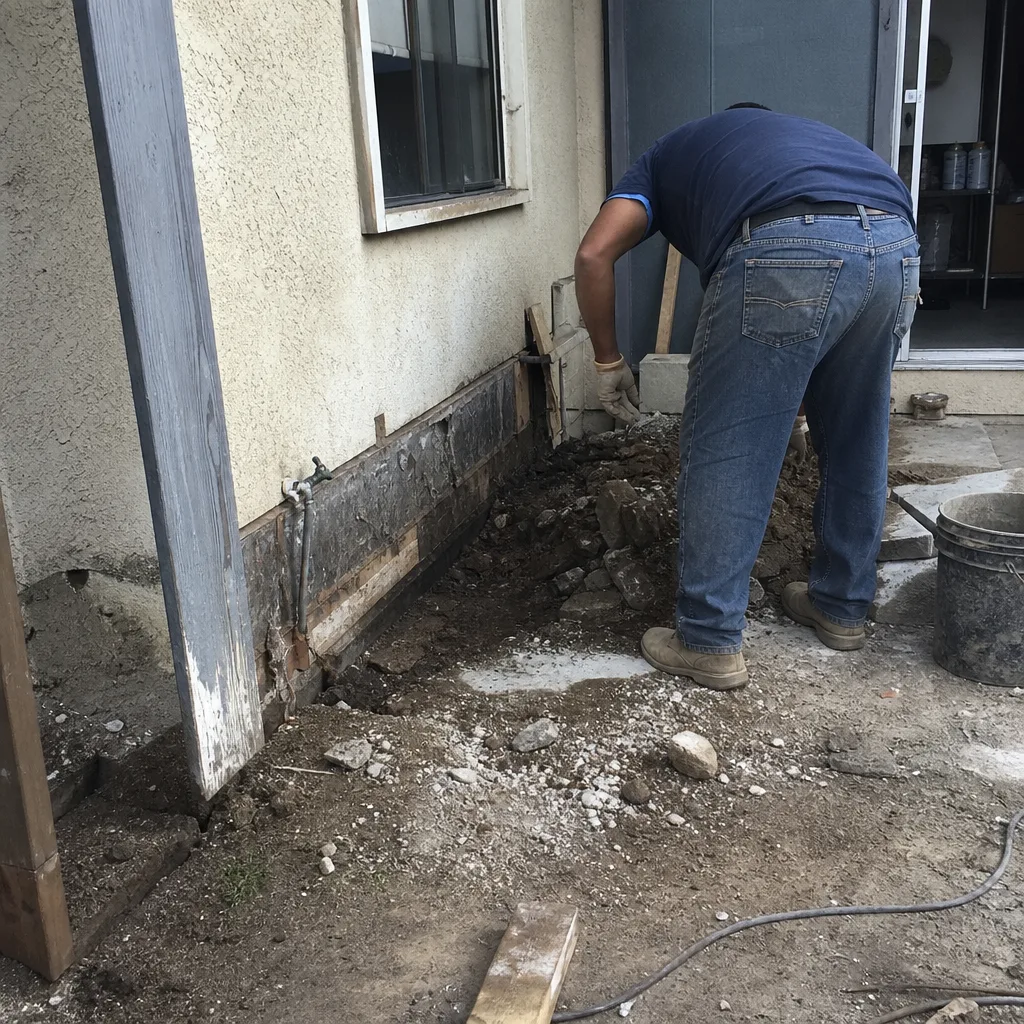 Before
 After
AfterReplacement Cost & What’s Included

Riverside fence post resetting and concrete replacement typically runs $3,500 to $9,000 for a full property line, broken down roughly like this:
- Post reset with new Quikrete fast-setting mix: $10 to $28 per linear foot, depending on post count and accessibility.
- Full post replacement with new cedar or steel posts: $20 to $45 per linear foot, including removal of the old concrete plug.
- Drainage gravel and post caps added: $3 to $8 per post, which we recommend for low spots in Riverside where water collects.
- Old fence removal and disposal: $3 to $7 per linear foot, or included at no charge when we’re doing a full reboot of the line.
The biggest factors that move your number: how deep the original posts were set, whether the concrete has to be broken out with a jackhammer, and how many corners and gate posts are involved. Every quote comes as a written number before we start, so there are no surprises once we’re digging. Our 365-Day Done Right Promise covers every fence post we set: if it shifts, cracks, or fails within a year, we come back and reset it at no charge. That’s in writing on every job.
DIY or Call Us?
You can safely check a few things yourself before calling: look at the concrete base around each post, probe the soil with a screwdriver to see if it’s still packed firm, and pour a cup of water at the base to see if it drains fast or pools. Those are safe checks. What we don’t recommend is digging out a post and pouring new concrete yourself. Here’s why: if the old concrete plug is cracked below grade, you can’t see that from the surface, and a partly-patched post will fail again next season. Setting posts in Riverside’s alkaline clay also means adjusting for expansive soil, and if the post depth is wrong for your fence height, you’ll have the same lean in eighteen months. We’d rather you spend an hour once than two weekends twice. If the damage is structural or you’ve got more than two posts involved, call (341) 895-1170 and we’ll have a real person tell you what we’re seeing and schedule someone to look. No pressure, no obligation.
FAQs
Quikrete concrete footings on properly set posts last 15 to 25 years in Riverside’s climate. The concrete itself rarely fails; what fails first is the bond between concrete and post when water gets in, or the surrounding soil loses its compaction. We build our footings with drainage gravel below the post so the bottom never sits in water, which is the real killer of fence longevity here.
Yes, if the post is still sound and the lean is due to concrete shift or soil erosion, we can straighten and reset it in place with fresh Quikrete fast-setting mix. If the post itself has rotted or twisted, replacement is usually cheaper in the long run. Call (341) 895-1170 for an honest read on yours.
We can reset one to three posts the same day using Quikrete fast-setting mix, which sets in 20 to 40 minutes and lets us hang the rails the same afternoon. A full property line in Riverside may take one to two days depending on how many old concrete plugs have to be jackhammered out.
We carry Quikrete Fast-Setting Concrete Mix, High-Strength Concrete Mix, and All-Purpose Gravel on the truck regularly. We also work with KraftMaid, Cambria, and Silestone products on our remodel side, which speaks to how seriously we take material selection across every job. If you need a specific Quikrete product for your fence, ask when you call and we’ll confirm before we arrive.
If your fence is leaning, cracking, or the concrete has shifted, you don’t have to guess what’s wrong. Call Penhallow Remodeling Riverside at (341) 895-1170 for a free estimate. We’ll give you a written number before we pick up a tool – that’s just how this works.
Written by Trevor Nash, Owner, Penhallow Remodeling Riverside at Penhallow Remodeling Riverside, serving Riverside and nearby areas.