Last updated October 15, 2026






Free written scope consultation - allowances, timeline, and change-order rules on paper before a single trade is scheduled
Construction Warning Signs: A Riverside Homeowner’s Reference Guide
Most homeowners think they’ll spot a bad contractor by the way he talks. They listen for pushiness, for vague answers, for the guy who won’t make eye contact. But in twenty years of remodeling in Riverside, we’ve learned something different: the contractors who cost homeowners the most money are often the friendliest people in the room. They show up on time. They nod at everything you say. They just won’t put anything on paper that pins them down. The warning signs that actually predict a blown budget or an abandoned project aren’t personality flaws. They’re document patterns. This guide will teach you how to read the paperwork, because in Riverside’s busy contractor market, the most expensive sentence is almost always verbal, not written: “Don’t worry, we’ll take care of that.” For a step-by-step approach to hiring the right professional, start with your paperwork requirements.
What we’ll cover: the specific contract language that signals future disputes, why unpermitted work is a hard stop rather than a negotiation, how to read a CSLB license page beyond just checking that it’s active, and what a real workmanship guarantee looks like when it’s actually enforceable.
Quick Answer
The clearest contractor warning signs in Riverside are all on paper: verbal estimates that never become a written fixed price, contract language like “allowances” or “plus materials,” a refusal to name subcontractors, no milestone dates on the payment schedule, no permit pulled for work that requires one, and a guarantee that exists only in conversation. If a contractor won’t put the price, the schedule, the scope, and the guarantee in writing before you hand over a deposit, walk away. A legitimate contractor hands you a written number before work starts and a written guarantee alongside the proposal. Our General Contractor Maintenance Checklist for Riverside Homeowners covers what else belongs in that proposal.
Styles & brands we work with
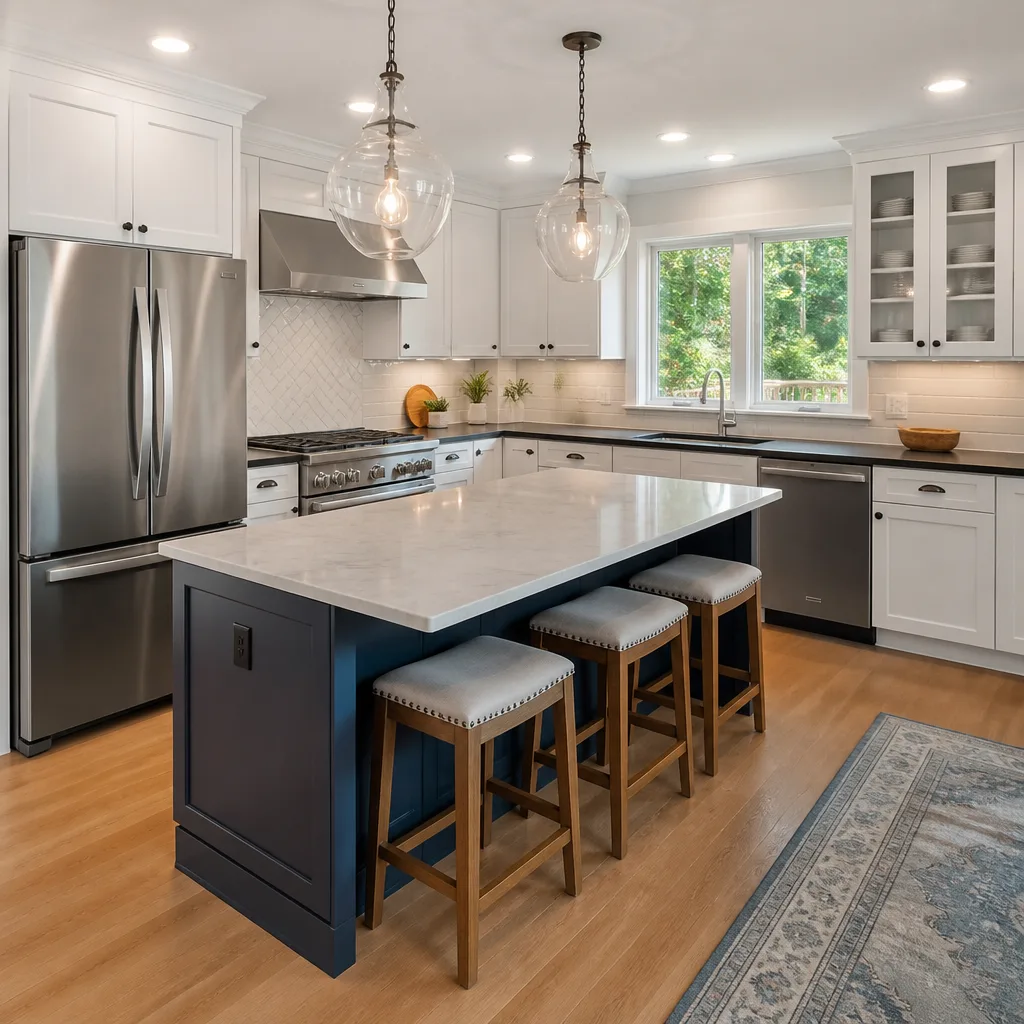




Table of Contents
- The Contract Language That Predicts Disputes
- Why “We Don’t Need a Permit” Is a Hard Stop
- Reading the CSLB License Page Beyond the License Number
- Scheduling Patterns That Predict Abandonment
- What a Workmanship Guarantee Looks Like in Writing
- Riverside Market Pressures That Create Bad Behavior
- Common Mistakes to Avoid
- When to Call a Professional
- Frequently Asked Questions
The Contract Language That Predicts Disputes
The single most reliable predictor of a cost dispute is the word “allowance.” Here’s what it means in practice: the contractor quotes you a number, but buried in the contract is a line that says something like “cabinet allowance: $8,000.” That $8,000 is not the price of your cabinets. It’s a placeholder. When the actual cabinet order comes in at $12,000, the contractor’s price goes up by $4,000 and he’s technically not changing the contract. The allowance was the contract. You just didn’t know what it meant.
In Riverside, where kitchen remodels routinely run $18,000 to $55,000 depending on layout, cabinet line, and countertop material, an allowance gap can add thousands of dollars you never planned for. The same applies to “plus materials” clauses. If a contract says labor is fixed but materials are billed “as incurred,” you’re signing an open-ended check. A legitimate contractor prices the materials. He knows what KraftMaid cabinets cost. He knows what a Cambria quartz slab runs per square foot. If he won’t commit the material number to paper, he’s either not experienced enough to price the job correctly or he’s planning to pass the overage to you later.
Here’s a short list of contract phrases that should make you pause:
- “Subject to site conditions” used broadly, not tied to a specific condition like “if we discover termite damage in the wall we open.” Broad language is a change-order machine.
- “Allowance” for any item over $500. Ask for a fixed number instead. If the contractor won’t give one, ask why.
- “Plus materials” or “materials billed at cost plus 20%.” You are now financing the contractor’s lack of planning.
- “Work to be performed in a workmanlike manner” without any objective standard attached. What does “workmanlike” mean when the tile cracks six months later? Ask for the specific products, specific installation methods, and specific warranty terms instead.
- “Any necessary repairs will be additional” without a defined process for approving those repairs in writing before work continues. You should have the right to approve any change order in writing before it’s performed.
What to ask for instead: a written fixed price for the entire scope of work, with line items for major materials. If a contractor in Riverside tells you a fixed price isn’t possible because “every job is different,” he’s telling you he doesn’t want to do the work of pricing it. Every job is different. A good contractor prices the specific job.
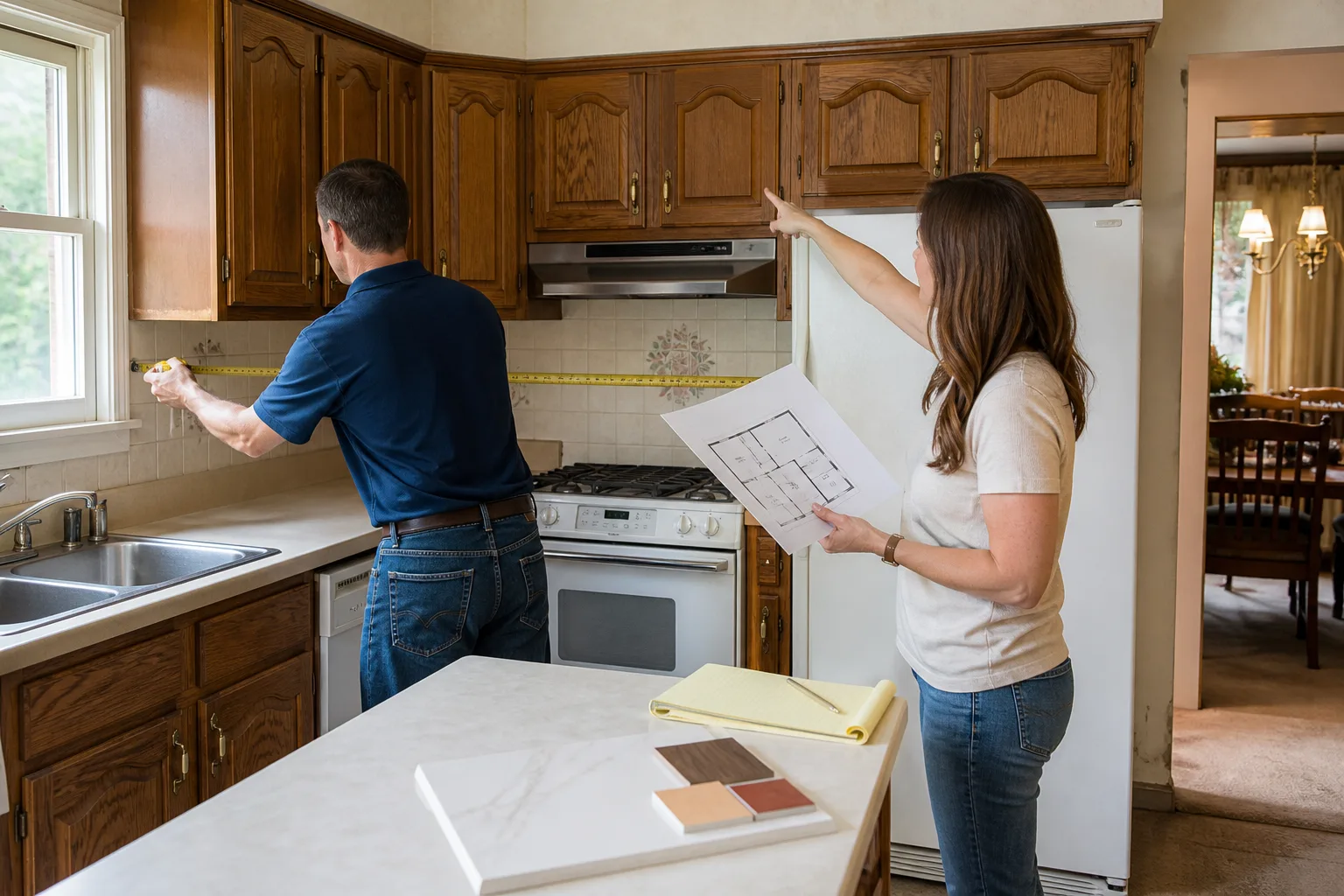
This is where the documentation-first approach matters. When we sit down with a homeowner for a kitchen remodeling project in Riverside, we walk through every line item together. The number on the proposal is the number on the invoice, not because we’re nice, but because that’s what a written price means. It’s the only kind of price that protects you.
Why “We Don’t Need a Permit” Is a Hard Stop
When a contractor says “we don’t need a permit for this,” what he’s really saying is one of three things: the work genuinely doesn’t require one under Riverside’s building code, the contractor doesn’t want the delay or the inspection, or the contractor isn’t licensed to pull the permit in the first place. The first one is fair. A new coat of paint doesn’t need a permit. Swapping out a faucet doesn’t either. But structural work does. Moving a load-bearing wall, rewiring a circuit, relocating plumbing fixtures, adding square footage, or changing a roofline all require permits and inspections in Riverside, just as they do throughout California.
Here’s what the contractor won’t tell you about skipping permits: the liability doesn’t skip. It transfers to you. When unpermitted work is discovered, whether during a future sale, a refinance appraisal, or an insurance claim after something fails, the homeowner is the one holding the problem. Your homeowners insurance can deny a claim for damage caused by unpermitted work. Your buyer’s lender can refuse to fund a loan on a house with unpermitted additions. And if the unpermitted work fails and causes damage, the contractor who did the work is often long gone or argues that you agreed to skip the permit. The California Contractors State License Board isn’t going to help you recover money for work that was performed illegally in the first place.
“But pulling permits costs more.” Yes. It does. A remodel with permits might add a few hundred to a few thousand dollars depending on scope, inspections, and the city’s fee schedule. That’s insurance. Permits mean a Riverside building inspector looked at the work and confirmed it meets current code. It means the work is documented. It means when you sell the house, you’re not explaining to a buyer why the bathroom in the listing photos doesn’t match the assessor’s records.
The conversation to have is simple: “Will you pull the permits for this job?” A licensed general contractor in Riverside answers yes. Not “sure, if you want,” not “well, that’ll add time.” Yes, it’s included in the price, and here’s when the inspector comes. If the answer is anything less than that, it’s a red flag. Not a negotiation point. A hard stop.
Reading the CSLB License Page Beyond the License Number
Most homeowners in Riverside check one thing: is the license active? That’s the bare minimum, and it’s not enough. The California Contractors State License Board’s website shows you a lot more than an active status line, and the rest of that page is where the warning signs live.
Here’s how to read a CSLB license page in five minutes:
- Check the status. “Active” is what you want. “Suspended,” “Revoked,” “Expired,” or “Inactive” are self-explanatory. Move on.
- Check the classification. A contractor licensed as a “B” (General Building Contractor) can perform and manage most residential remodeling scopes. An “A” license is for general engineering, not residential remodels. Certain specialty trades hold C-classifications: C-36 for plumbing, C-10 for electrical, C-54 for tile. If the person signing your contract holds a C-54 but is promising to manage your entire bathroom remodel including moving plumbing lines, you’ve got a problem. He can’t legally do the work he’s proposing.
- Check the bond status. The CSLB requires every licensed contractor to maintain a contractor’s bond. The page will show the bond amount and whether it’s current. The bond is your first line of recovery if the contractor violates contract terms and you win a judgment. A contractor whose bond has lapsed is not in good standing. Period.
- Check workers’ compensation insurance. This is the one most homeowners skip, and in Riverside it’s the one that can hurt. If a contractor has employees and doesn’t carry workers’ comp, and one of those workers is injured on your property, the claim can fall on your homeowners insurance. The CSLB page will show whether the contractor carries workers’ comp or has filed an exemption. The exemption means no employees, which is fine for a solo operator. But if you know the contractor runs a crew, and he’s exempt, someone is misclassified. That’s your problem, not his.
- Check for disclosed complaints or legal actions. The CSLB posts public information about license actions, citations, and arbitration results. A history isn’t automatically disqualifying: even good contractors end up in disputes sometimes. But a pattern of unresolved complaints, multiple citations for the same violation, or a revoked and reissued license should stop your project.
It takes five minutes. Most homeowners in Riverside skip all of it. They call the phone number on the truck and sign the contract. But the license page tells you things the contractor never will: whether he’s legally allowed to do the work, whether his bond is in force, and whether he carries the insurance that protects you if something goes wrong. We tell every homeowner to check ours. Ask for the license number before the first meeting. If the contractor bristles, that’s your answer.
Scheduling Patterns That Predict Abandonment
Contractor abandonment doesn’t happen on day one. It happens in slow motion, weeks into a project, and the contract you signed usually predicted it. Here’s what abandonment looks like on paper, before a single worker shows up.
First, no subcontractor names. Most general contractors in Riverside use subcontractors for electrical, plumbing, tile, and drywall. That’s normal. What’s not normal is a contract that says “subcontractors to be determined.” It means one of two things: the contractor doesn’t have a stable network of subs in Riverside, or he’s going to shop for the cheapest available labor once your deposit clears. Either one is a schedule risk. Ask for the names of the subs before you sign. If the contractor can’t tell you who’s doing your electrical work, he can’t tell you when they’ll show up either.
Second, no milestone dates. A contract that says “work to be completed in approximately six weeks” with no breakdown of what gets done each week is a promise with no teeth. You want milestone dates: demolition completed by date X, rough-in inspection scheduled by date Y, drywall hung by date Z. These don’t have to be rigid to the day; construction slips. But they create accountability. A contractor who won’t commit to any interim deadlines is a contractor who’s never going to be “behind.”
Third, a payment schedule that’s front-loaded to the contractor’s benefit. Here’s the pattern to avoid: 50% due at signing, 40% due at “start of work,” and the remaining 10% due at completion. That means you’ve paid 90% of the money before the first cabinet is installed. If the job goes sideways, the contractor has no financial reason to come back. The contractor’s profit should be at the end, not the beginning. A reasonable structure for a Riverside remodel: a deposit to reserve the schedule (10-20%), progress payments tied to completed milestones, and the final 10-15% held until inspection passes and the punch list is done. If a contractor demands more than a 30-40% deposit on a large project, ask where the money is going. If the answer is “materials,” ask which materials, for which job stage, and whether you can pay for them directly. The answer will tell you everything.
When we scope a bathroom remodel in Riverside, we put milestone dates and milestone payments in writing. The price is in writing before work starts. So is the schedule. So is the payment structure. Not because homeowners demanded it once upon a time, but because it’s the only way a fixed price means anything.
What a Workmanship Guarantee Looks Like in Writing
The most common construction guarantee in Riverside is the verbal one: “Don’t worry, if anything goes wrong, just call me.” It’s not a guarantee. It’s a sentence. And when the tile cracks or the cabinet door sags fourteen months later, that sentence is worth exactly nothing. Here’s what separates a real workmanship guarantee from a verbal reassurance.
A real guarantee has four components, and all four are in writing:
- A defined scope. What exactly is covered? Workmanship only? Materials? Fixtures? A guarantee that says “we guarantee our work” is too vague. A guarantee that says “we cover installation defects in workmanship on all labor performed under this contract” tells you specifically what’s covered.
- A defined duration. How long does the guarantee last? Sixty days is weak. One year is standard for residential remodeling work in California. Five years is exceptional. The duration should be stated in days or years, not “for a reasonable period.”
- A defined remedy. If something fails inside the guarantee period, what happens? Does the contractor come back and fix it at no charge? Is there a service fee? Does the homeowner need to put the complaint in writing? A real guarantee states the process: how you report, how fast they respond, and what you pay (nothing, if the failure is covered).
- A defined signatory. The guarantee should be part of the written contract, signed by the same person who signs the contract. A separate warranty certificate is fine. A business card with “all work guaranteed!” printed on the back is not.
What about material warranties? They matter too, and they should be named. Cambria quartz countertops carry a lifetime warranty from the manufacturer. James Hardie siding carries a 30-year transferable product warranty. Kohler and Moen fixtures carry their own limited lifetime warranties. These are real, enforceable, and independent of the contractor. A good contractor names the products in the contract so you know exactly what you’re getting and exactly what each manufacturer stands behind.
If a contractor in Riverside won’t write the guarantee terms into the contract, ask yourself what he’s afraid of. The answer is usually that he’s been called back before and didn’t enjoy it.
In our own contracts, the 365-Day Done Right Promise is written on every job: if the work fails inside the guarantee period, we come back and fix it at no charge. Not “try to come back.” Not “come back if we’re not too busy.” It’s a written commitment, and a free second visit if a repair fails, with no service call and no re-inspection fee. That’s what an enforceable guarantee looks like. It’s specific. It’s dated. It’s signed.
Riverside Market Pressures That Create Bad Behavior
Riverside’s remodel market has its own dynamics, and those dynamics create specific pressures that make warning signs appear more often here than in slower markets. Understanding the local landscape helps you understand why a contractor is behaving the way he is.
First, the permit reality. Riverside operates under the California Building Code with local amendments, and the city’s permit process for residential remodels takes time. A permit application for a kitchen remodel can sit in review for weeks before it’s approved. Some contractors skip permits not because they’re dishonest but because they’re impatient, and they pass their impatience to you. The problem is that impatience becomes your permanent record. Unpermitted work follows the house, not the contractor.
Second, the summer heat. Riverside routinely sees summer temperatures over 95 degrees, and exterior work like siding replacement or a structural addition has to be scheduled around it. A contractor who promises an aggressive schedule through July and August is either superhuman or not planning for the heat. Look for realistic scheduling language: “we’ll start the framing in the morning and pull crews off the site by early afternoon when temperatures are extreme.” That’s a contractor who’s been here through a Riverside summer.
Third, the subcontractor pool. Riverside draws subs from all over the Inland Empire: Moreno Valley, Corona, Jurupa Valley, Eastvale. The quality range is wide. A contractor with a stable, named sub list in Riverside is valuable because the good subs are booked months out. A contractor who won’t name his subs is often using whoever’s available, which means whoever wasn’t good enough to get booked by the established firms.
Fourth, the prefab and modular conversation. Riverside has become a hub for the modern prefab movement, with companies like Plant Prefab and Mighty Buildings changing what homeowners think is possible. That’s changing expectations around schedule and scope. A traditional remodel that takes five months now competes against a prefab addition that’s delivered in six weeks. The lesson isn’t that everyone should build prefab. The lesson is that contractors who can’t explain why their timeline is what it is, especially when the prefab alternative exists, are hiding something about their process. Good builders in Riverside can talk about it openly. The bad ones change the subject.
When we meet homeowners for a whole-home remodel consultation, we walk through what’s realistic in Riverside right now: permit timelines, material lead times, the weather windows, the sub availability. Because the honest conversation about schedule is part of the written number. If the schedule slips, you should already know why that happens and what we do about it.
Common Mistakes to Avoid
- Taking a verbal estimate as a commitment. If the number isn’t written, it doesn’t exist. Every conversation about price should end with the number on paper within days. If weeks pass and the contractor avoids putting it in writing, he’s avoiding accountability.
- Paying a large deposit before the contract names the materials. Once you’ve paid, your leverage evaporates. Never pay a deposit on a contract that still has “allowance” or “TBD” next to the big-ticket materials like cabinets, countertops, and fixtures.
- Checking only the contractor’s star rating, not the CSLB page. Review platforms are useful but they don’t show license classifications, bond status, or workers’ comp coverage. Those three items can end up costing more than a five-star rating can save you.
- Believing a guarantee that’s only spoken. The phrase “I stand behind my work” is a personality claim, not a warranty. If it’s not in the contract, it’s not real. Ask the contractor to add the guarantee terms in writing. If he won’t, he just told you he doesn’t stand behind his work.
- Signing a contract with no milestone dates. You need deadlines for demolition, rough-in, inspection, drywall, fixture install, and final punch list. Without them, “the schedule” is whatever the contractor says it is on any given day.
- Letting the contractor “just take care of the permit later.” The permit should be pulled before work starts, not after the walls are open. “We’ll get it retroactively” usually means “we got caught.” The retroactive permit process is harder, slower, and the city can require opening up finished work for inspection.
When to Call a Professional
If you’re reading this guide because something already feels wrong, trust that feeling. You should call a professional for a second look when: the contractor you hired won’t return calls after taking a deposit; the contract you signed contains allowances for major materials and the actual prices are coming in far above the allowance; the work started without a permit and you’ve been told not to worry about it; or the contractor is asking for a payment ahead of schedule to “keep the project moving.” These aren’t problems that fix themselves. They’re patterns.
Sometimes the right move is to stop the project, document everything, and consult a real estate or construction attorney. Sometimes the right move is to bring in a second contractor to assess what’s been done and whether it’s correct. And if you’re at the beginning of a remodel and want to know what a written price and a written guarantee actually look like before you commit to anyone, Penhallow Remodeling Riverside offers free estimates in Riverside. Call (341) 895-1170 and ask for your free estimate. We’ll show you the paperwork. You judge the difference yourself.
Frequently Asked Questions
The biggest warning signs are all document-based: verbal estimates that never become a written fixed price, contract language like “allowance” and “plus materials” for major items, no permit pulled for work that requires one, no subcontractor names on the contract, a payment schedule with most of the money due up front, and a workmanship guarantee that exists only in conversation. A legitimate contractor can put every one of these in writing, and a written price before work starts is the bare minimum in Riverside. Before you sign anything, call (341) 895-1170 for a second opinion on your contract terms.
Kitchen remodels in Riverside typically run $18,000 to $55,000 depending on the layout, the cabinet line, and the countertop material. A kitchen with stock cabinets and laminate countertops is at the low end; a kitchen with custom or semi-custom cabinets and Cambria quartz is at the high end. When you’re comparing quotes, watch for allowances and “plus materials” clauses because those are the mechanisms that push a low quote toward a high final cost. If you want to see a documented line-item price for your kitchen, call (341) 895-1170 for a free estimate with specifics.
Only if the work genuinely doesn’t require one, and you should verify that yourself with the City of Riverside rather than taking the contractor’s word. Paint, flooring replacement, and fixture swaps often don’t need permits. Moving plumbing, electrical, structural walls, or adding square footage almost always does. The liability of unpermitted work stays with the house and follows you into any future sale or insurance claim. A contractor who refuses to pull permits is asking you to carry the risk.
Go to the CSLB’s website and search by name or license number. You’re checking five things: the license status is active, the classification matches the work being proposed (a “B” for general building), the bond is current, workers’ compensation insurance is in place for any employees, and there are no disclosed citations or disciplinary actions that suggest a pattern. The bond status and workers’ comp line are the two items most homeowners skip, and the two that matter most when something goes wrong.
A real workmanship guarantee includes four things in writing: the scope of what’s covered, the duration in days or years, the remedy if something fails, and the signature of the contractor. “We guarantee our work” isn’t a guarantee. “Labor installation defects covered for 365 days, repair at no charge upon written notification, signed by the contractor” is. Also ask for the material manufacturers’ warranties: a Cambria quartz countertop carries a lifetime warranty from Cambria, independent of any contractor promise.
A good one will, and more importantly, a good one will define the schedule in the contract with milestone dates: demolition by X, rough-in by Y, final inspection by Z. A contractor who shows up when promised and communicates schedule changes is a normal expectation, not a luxury. When we schedule a job in Riverside, we commit to a defined arrival window in writing, because showing up when you said you would is part of the same promise as the price you quoted.
The Bottom Line

Construction warning signs are almost never personality problems. They’re paper problems. The contractor who smiles and promises and “takes care of everything” without writing anything down is more dangerous than the one who’s a little gruff but hands you a detailed contract. You need a written price before work starts, a permit pulled for anything that requires one, a license that’s active with a current bond and workers’ comp, a payment schedule tied to completed milestones, and a guarantee that names exactly what’s covered, for how long, and what happens if it fails. That’s the standard in Riverside, and it’s not unreasonable. It’s the minimum. If a contractor can’t meet it, the problem isn’t your list. It’s their paperwork. Once you’ve found a contractor who meets these standards, bookmark our more guides & resources for every phase of your project.
Call (341) 895-1170 to schedule your free estimate with Penhallow Remodeling Riverside. We’ll put the price, the schedule, and the guarantee in writing. You can compare.
Written by Trevor Nash, Owner at Penhallow Remodeling Riverside, serving Riverside and the Inland Empire since 2004.
See the difference
 Before
 After
After Before
 After
After Before
 After
After